The spiritual centre of the universe – TIBET, May 2012
Translated from Russian Read the original →
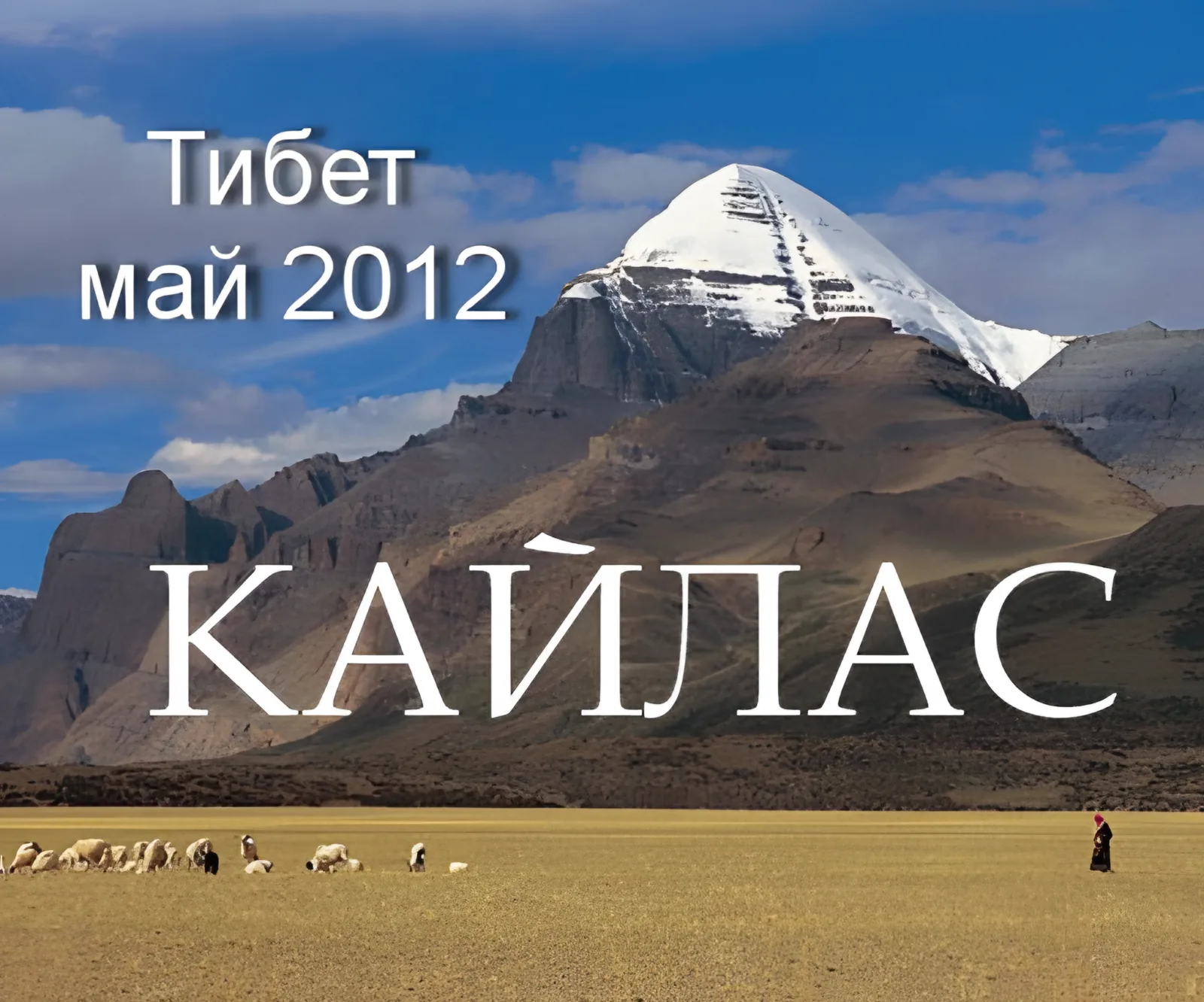
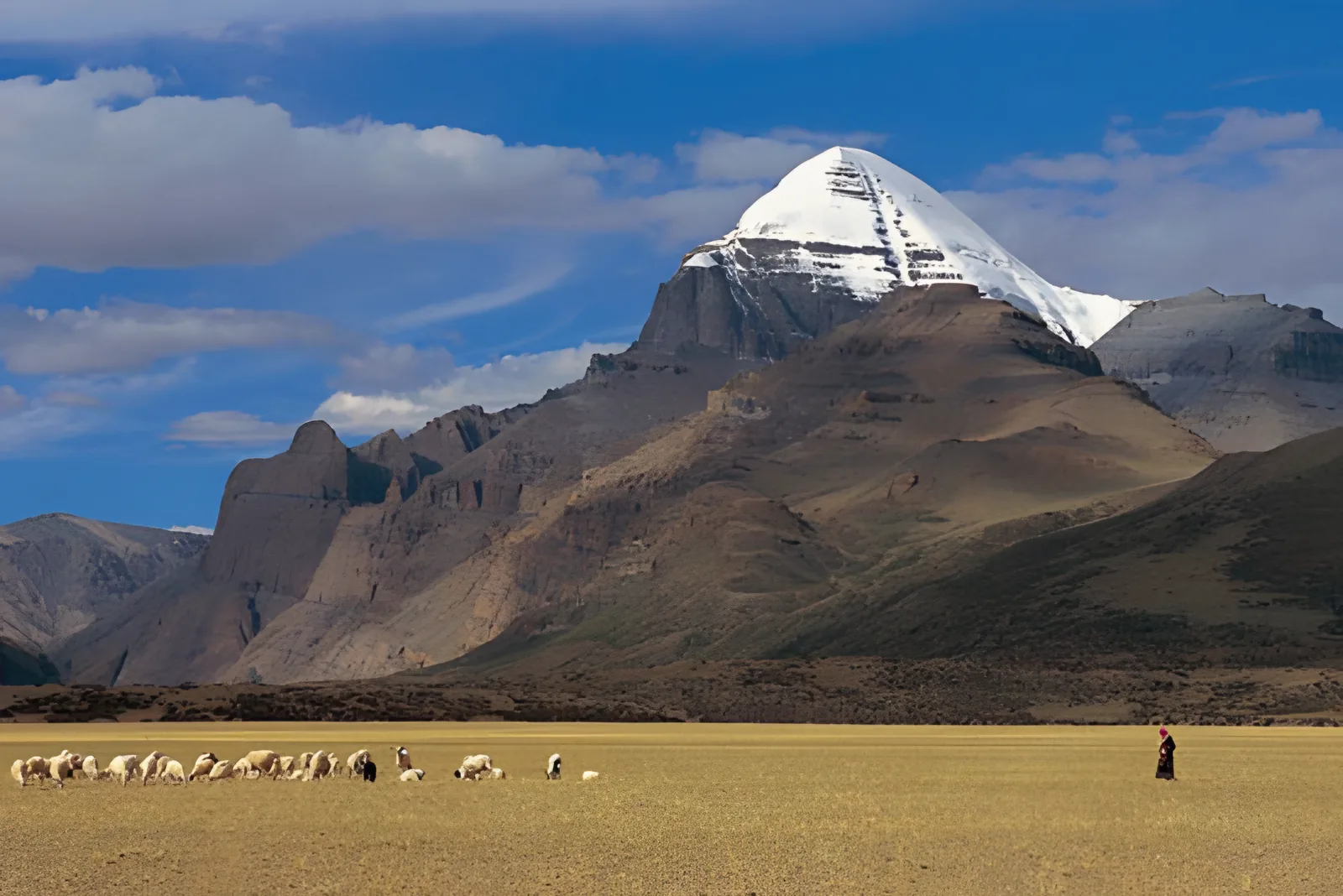
Mount Kailash, 6714 m, is the most sacred peak in Asia.
It is wrapped in the mystery of ancient legends and mystical teachings, and for many centuries has been a place of worship and a centre of pilgrimage for followers of four great religions – Buddhism, Hinduism, Jainism and Bon Po – and lately it attracts more and more tourists from all over the world.
This peak of astonishing beauty, crowned with a shining dome of ice, is a grand pyramid of rock in perfect proportions and the most powerful energy centre in the world, with which many myths and legends are linked. The four ridges of Mount Kailash correspond almost exactly to the main points of the compass, and the cracks on its southern side are shaped like a swastika, the Buddhist symbol of spiritual power. Neither geographically nor geologically does Kailash belong to the main Himalayan range. According to the official version of the geologists, it rose together with the plateau from the ocean floor, and existed long before the Himalayas appeared.
Mount Kailash is revered as the spiritual centre of the universe, for it is joined by divine providence to the very Source of Being. In Tibetan, Kailash sounds like Gangkar Tise, and in colloquial speech – Kang Rinpoche, or “Snow Jewel”. In Asia there is a widespread myth of a sacred mountain, the centre of the world, on whose slopes four great rivers rise, giving life to the lands through which they flow. The source of this myth is in the Indian epic, which tells of Mount Meru, the abode of the gods. Its height is immeasurable, its summit rests against the heavens, its slopes sparkle with gold, rubies, crystal and lapis lazuli.
According to Indian sources this mountain lies somewhere in the Himalayas, and in time the legend of mythical Mount Meru came to be associated more and more with Mount Kailash. Four great rivers of Asia really do rise here. On the southern slope begins the Karnali, one of the main tributaries of the Ganges. The sources of the Indus begin on the northern slope, of the Sutlej on the western, of the Brahmaputra (Yarlung Tsangpo) on the eastern.
Hindus believe that Kailash is the cosmic centre of the universe. According to the tradition of the Vishnu Purana, the peak is a reflection or image of Mount Sumeru, the cosmic mountain at the centre of the Universe, the “axis of the Universe”.
Kailash (Kang Rinpoche, “Snow Jewel” in Tibetan) is a reflection of Meru in our manifest world. Buddhists have also proclaimed Kailash the Mountain of the Swastika. The round cone of Kailash is almost symmetrical; on all its faces you can clearly see horizontal and vertical stripes and ridges that form the pattern of a swastika, the symbol of spiritual power. Perhaps this is the original birthplace of this solar sign.
There are stories of the Panchen Lama’s journey here and of the secret books he compiled about the paths to Shambhala…
According to Buddhist belief, if you walk around this mountain with right thoughts and motivation, you can cleanse the karma accumulated over several past lives. The Drolma La pass on the circuit around the mountain symbolises death and birth into a new life. Buddhists perform the nendra ritual here, during which they recite a mantra 108 times on their prayer beads.
For followers of the pre-Buddhist religion Bon Po, Kailash is the mythical ladder to heaven, the centre and soul of Tibet. In the history of Bon, the first master, Tonpa Shenrab, came down from the heavens precisely on Mount Kailash. For followers of the ancient Tibetan religion Bon, Mount Kailash and Lake Manasarovar at its foot are the heart of the ancient land of Zhangzhung, where Bon was born. Kailash, which in Bon is called Yungdrung Gu Tse (“the Nine-Storey Swastika Mountain”), is the soul of all Bon, the focus of its life force and of the main principle of the “Nine Ways of Bon”. The Bon tradition says: “At the foot of Mount Yungdrung four rivers rise, flowing in 4 directions.