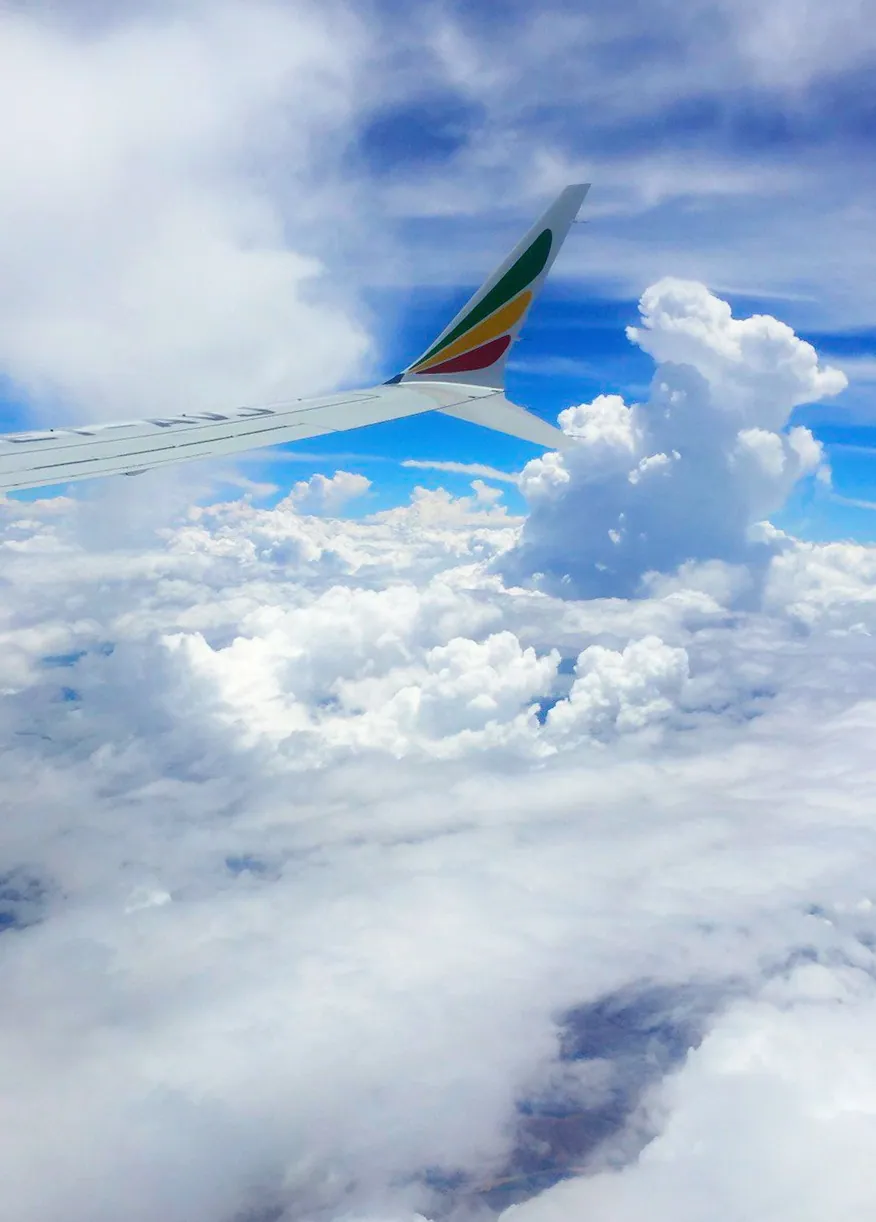
Chapter 1. ANTANANARIVO. THE CAPITAL. A VIEW FROM ABOVE.
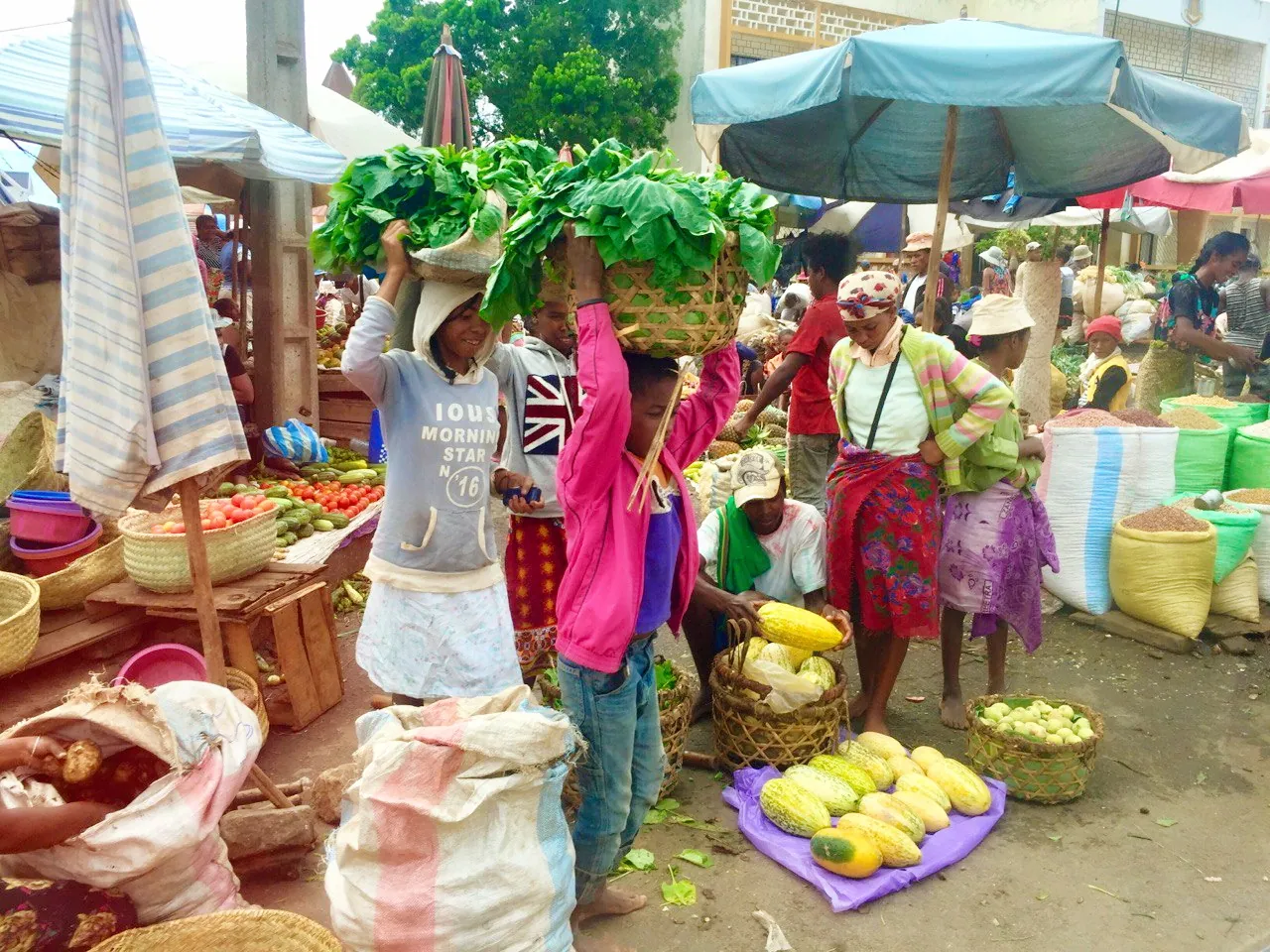
In the motley bustle of life and movement on its streets Antananarivo is like colourful India.
Traffic jams, all sorts of wonderful transport, stalls crowding together in all colours with handicrafts, all kinds of junk, meat, fruit.
And people of all sexes and colours.
The inhabitants of Antananarivo – mostly young, walking at an unhurried pace about their business with baskets on their heads, children in their arms, babies on their backs, clustering in little flocks, flirting with young shop girls – create an atmosphere of pulsing life.
And indeed, over the last 20 years Madagascar has almost doubled its population. The demographic explosion has meant that the age of the average citizen of the country does not exceed 24.
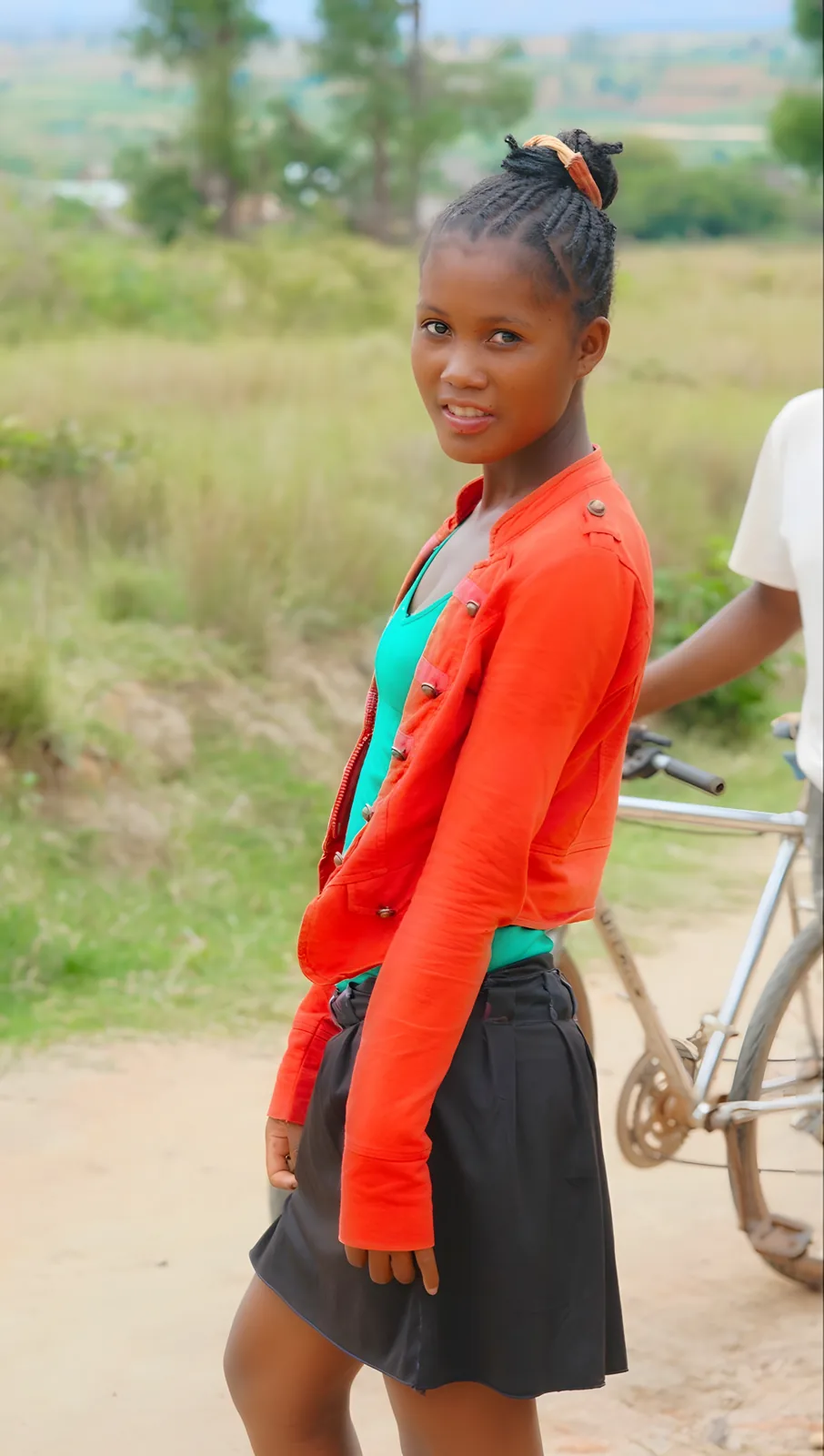
Our guide Solofo explained the reason for such growth and rejuvenation of the population by the fact that early pregnancy is common here, especially in the villages. 14 is considered an acceptable age for a girl to have a child.
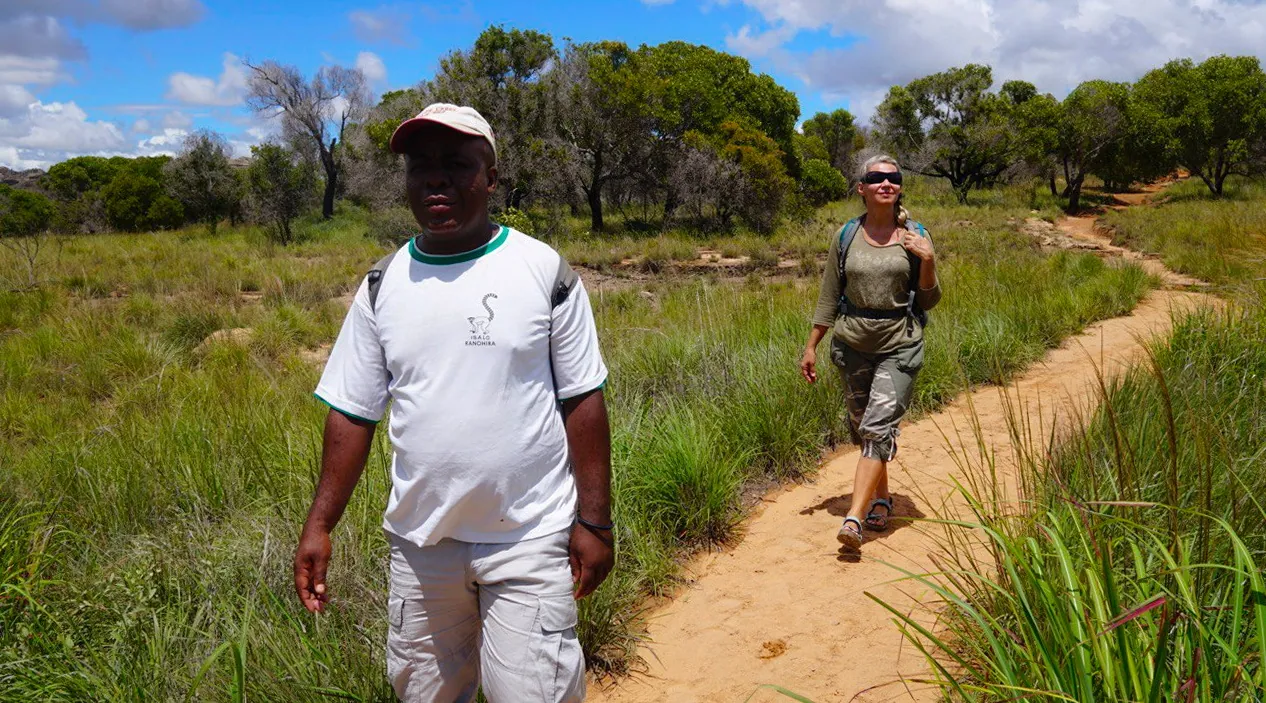
Solofo is our guide.
His Russian is incredibly colourful.
There is a special charm when a foreigner has spoken the language for 20 years, but the endings of the verbs and nouns are all in the wrong places. Everything is understandable, and you don’t want to correct it. To correct it would be to rob such a wonderful narrative of its Malagasy flavour. My hand won’t rise, nor will my tongue turn, and I quietly melt into a smile of tenderness and admiration.
Solofo studied in the Soviet Union, which is where his knowledge of the language comes from, and after that – with varying success and as occasion arose. He is always glad to meet Russian-speaking people.
Solofo is practically a professor of ornithology: he has several articles of world significance to his name about the rarest birds of Madagascar
All through the journey I would be amazed at his such genuine wish to serve.
“Here is your water, Natasha, not from the fridge,” and to my companion he gives a cold one: “Look over here…”, “I thought it would be better for you…” – he remembers such small details of daily life of the people in his care that they forget themselves, under the impression of being in this wonderful country.
He is as attentive as, probably, only an ornithologist can be.
This wonderful observance is like an “occupational deformation”, or love for all that lives, but it is so pleasant. It sometimes simply seemed to me that he was reading my thoughts.
It wins you over, first of all, with its artlessness and direct curiosity about whether I am / we are comfortable, right now, this very second.
At the same time I thought, at the end of the journey, that his care was so optimal and so unobtrusive that not once did I say “no” to his offers to improve my present moment.
So the conclusion: our guide was practically a Buddhist.
A Madagascan Buddhist of African blood, speaking a mystically touching, non-academic Russian.
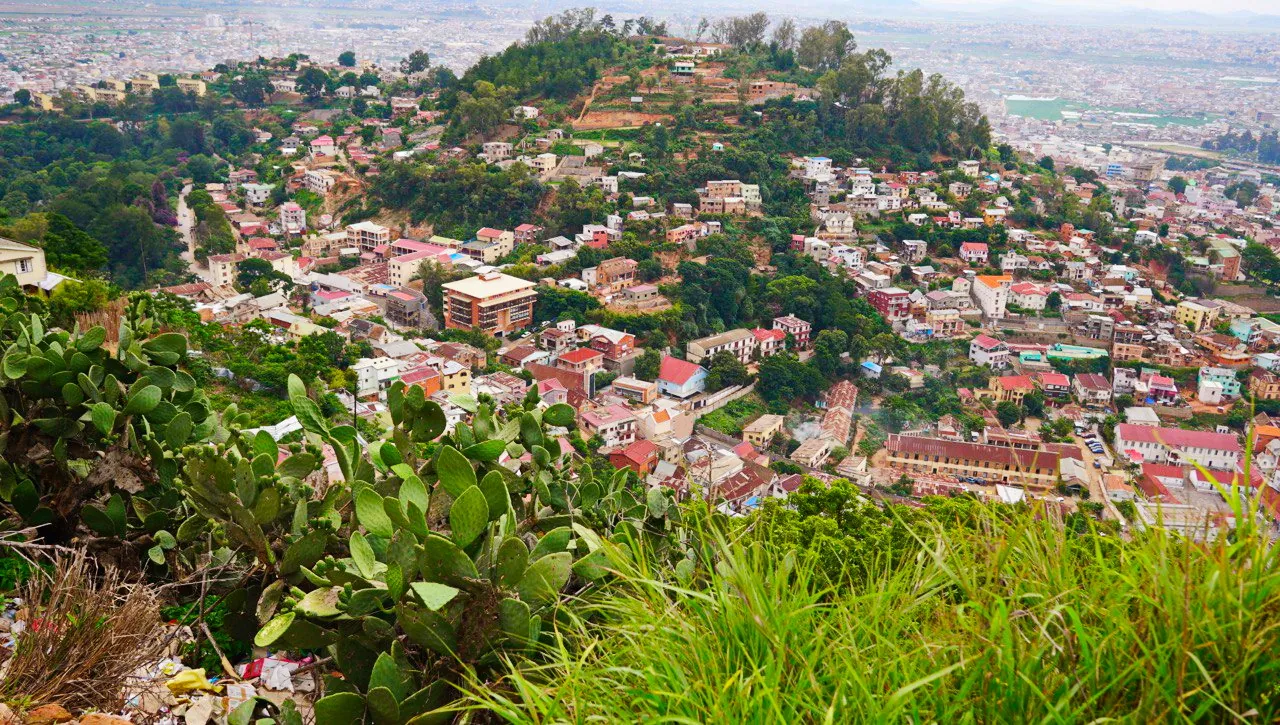
The idea of seeing from above the place we had arrived in, and of taking a look around at the very start of the journey, was the right one, you will agree.
You can feel the scale, the quality and the variety of the architecture, the relief of the landscape and the spirit of the people.
And only then, walking around the country, check whether your first impression was right. Delve into the details of daily life and gain depth in your understanding of what the people here live for, and how.
And Solofo took us to just such a place.
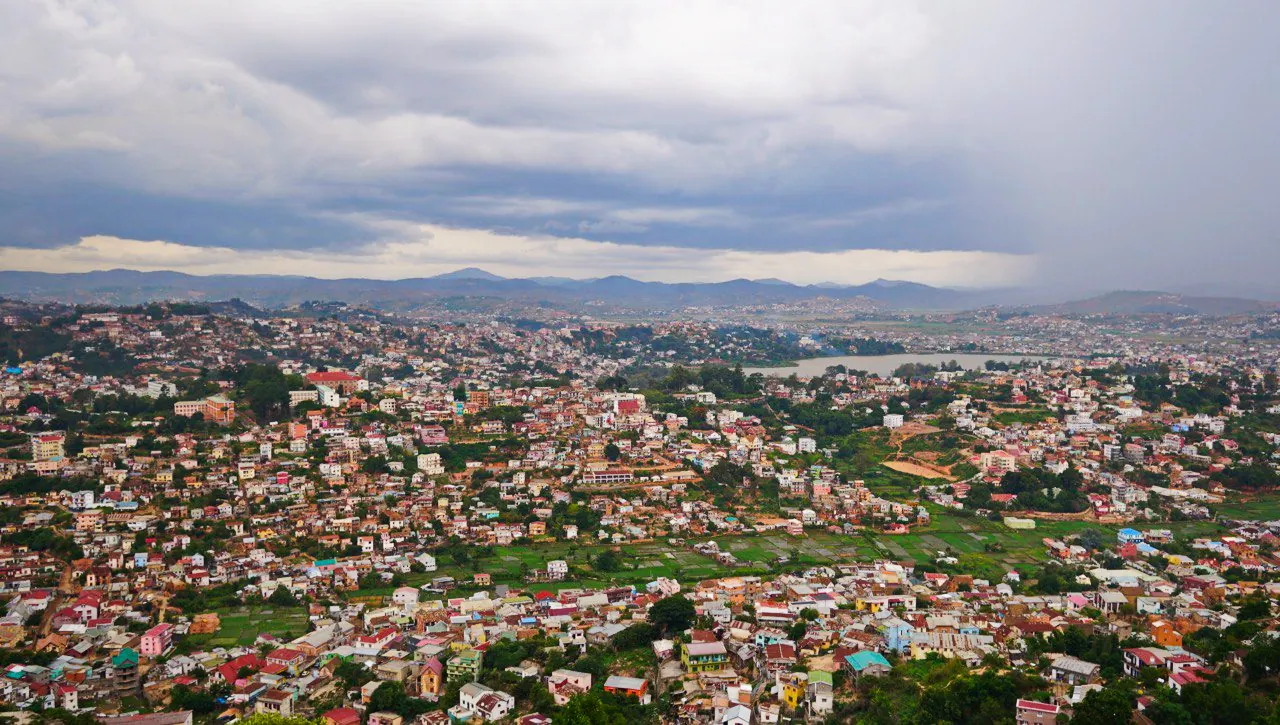
The height from which everything could be seen was the royal palace on the hill. A majestic, dark, uninhabited cultural and historical site with a park and balconies all around its perimeter.
Having climbed up to this significant “clearing” of the city and looked over the horizon, I was surprised how hilly Antananarivo is.
Thunderclouds had gathered all around the perimeter.
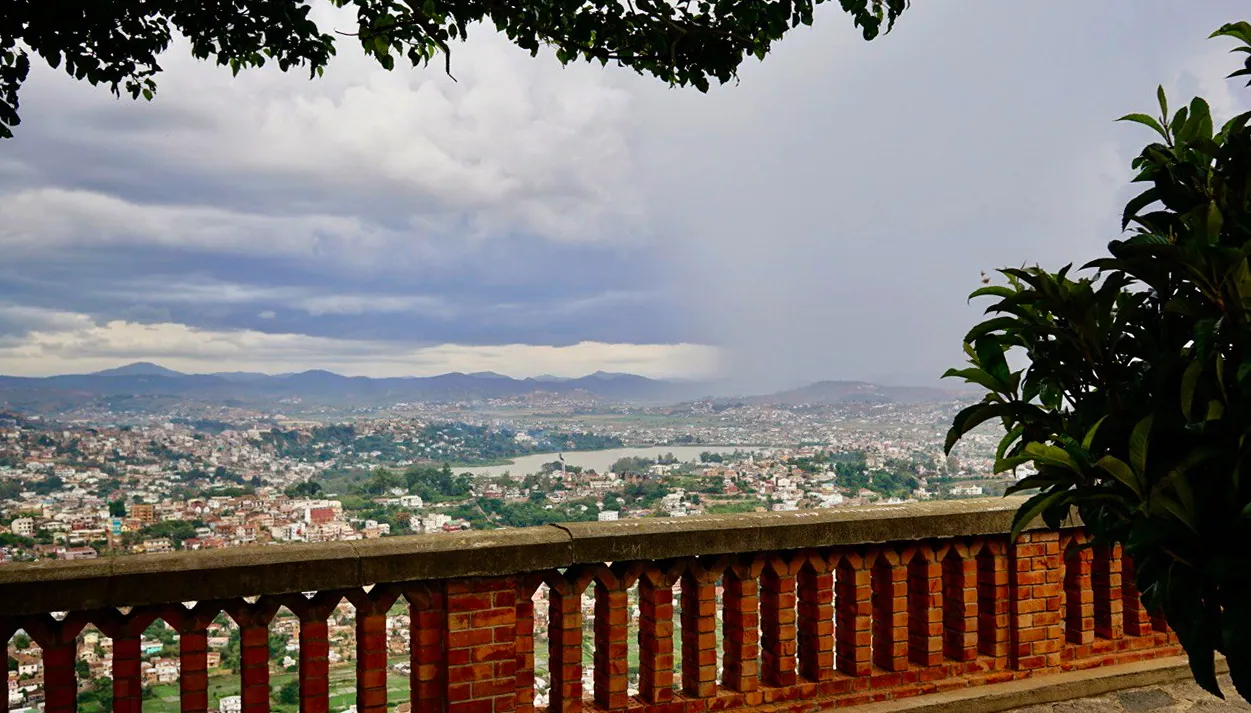
The main hill of the city, on which the palace stood, was practically a mountain. Because of this the horizon was very far away.
The cloud cover was changeable, the whole city was covered with patches of sunlight, which added to its impression of relief and emphasised the unreal redness of the Madagascan earth.
The island’s red soil, contrasting with the lush green, is Madagascar’s calling card, as though reminding travellers that Madagascar is not just an island.
It is like another planet with a unique flora and fauna.
Most of the living forms found here are endemic: 80 per cent of all the animals and plants are found nowhere else on the planet.
Madagascar broke away from Africa; you can see this from the island’s coastline and the nearby outline of Africa. Like a puzzle piece, its shore facing the mainland repeats the shape of the African coastal strip.
Well, this happened in those unimaginably distant times when Pangaea itself was splitting up.
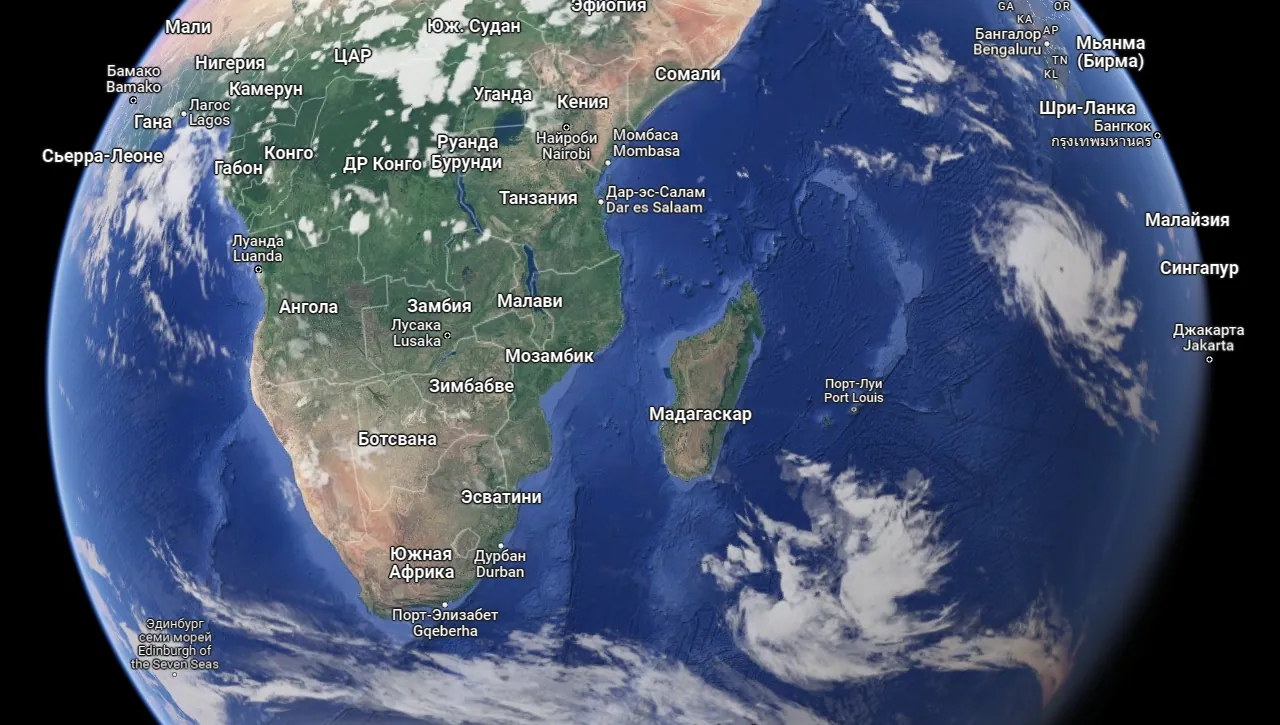
Pangaea was one single common continent, which split into parts then, and to this day those parts continue to drift apart across the world’s oceans, each at its own speed, imperceptible to us, set by that original impulse of the separation of the continents.
People appeared on Madagascar only a thousand and a half years ago, and the island’s unique flora and fauna, fortunately, was not subjected to the influence / extermination / cultivation of sapiens.
The arrival of man here was of course inevitable, but who would have thought that it would be people who had sailed not from Africa but from the islands of Micronesia, from Thailand, Indonesia, the Philippines.
We cannot know this for certain now, but the language of the Malagasy belongs to this language group, and the people’s appearance clearly points, for example, to Bali. Their fishing boats are also of a characteristic “cut”.
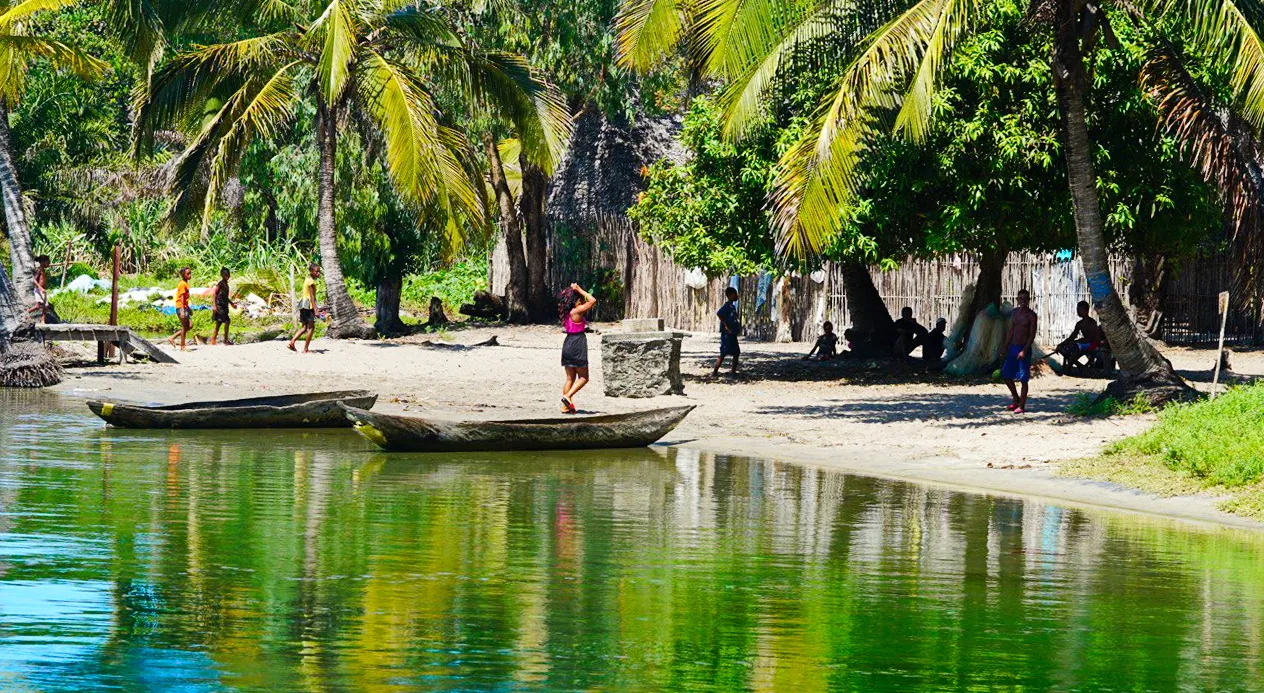
This information and my impressions of the local people finally put together for me a picture of “who is here”.
My earlier journeys to Bali, around India, Nepal, Thailand, the African countries of Tanzania and Namibia simply left me no doubt.
The spirit of a people, which you soak up as you travel through a country, immersing yourself for weeks in its culture, distinctly and unfailingly leaves its characteristic ornament in your soul – and it is impossible to unsee it.
So, after comparing the ornaments of the folk traditions of the world’s peoples into which you happened to dive, you automatically find the key to the basic meanings of the people living here.
As in psychology, comparing stories, you see how it will all continue, how it will end, what lies in store, what it threatens, where the soul is in it.
Where people live to, whom they pray to, what the depth of their smiles is about – to grasp this, in the endless variety of destinies and ethnic groups, means for me to be human. A human being living on the earth, collecting the puzzle pieces of her soul from all corners of the Earth. To remember who you are.
We stood for a long time, looking out over the motley radius of the horizon, which shrinks all the buildings in perspective and stretches into the distance as a bright, contrasting carpet of warm colours.
In the lowland of the city there is a lake, reflecting the sky.
In the distance, all around, compact, fragmentary showers were falling.
The clouds, in grey-blue bands like the broad trunks of baobabs, rested on the ground, blurring the sharpness of the landscape picture.
It was epically beautiful.
It was the end of December – the rainy season.
A good, full first rain came to greet us too. It was in the evening on an open terrace, where we were having dinner, discussing the whole programme of the journey with our guide.
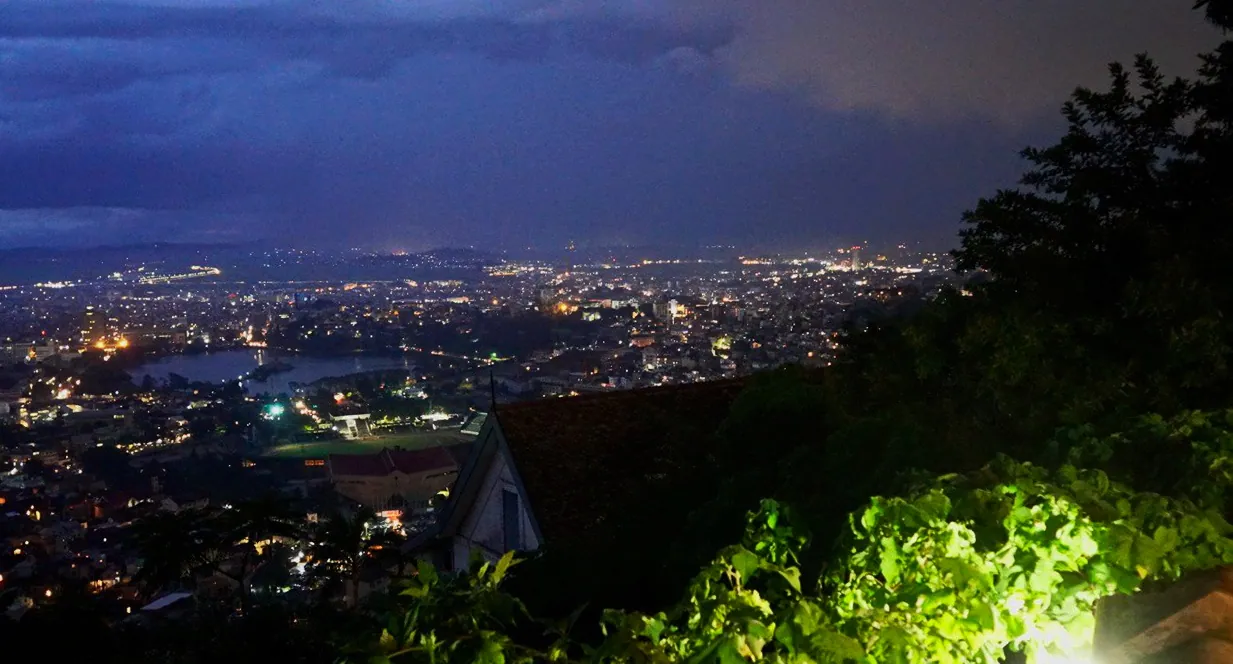
The rain came and pressed the whole city beneath it. It brought freshness, hung the horizon with garlands of lightning, completing the evening panorama of Antananarivo with the pulsing illumination of lightning flashes.
Spray hung in the air, making it one hundred per cent humid even under the awning, but it was warm.
In the southern hemisphere it is summer.