«Life begins where the asphalt ends». And where life itself really ends – transpersonal experiences begin – Natalia Valitskaya.
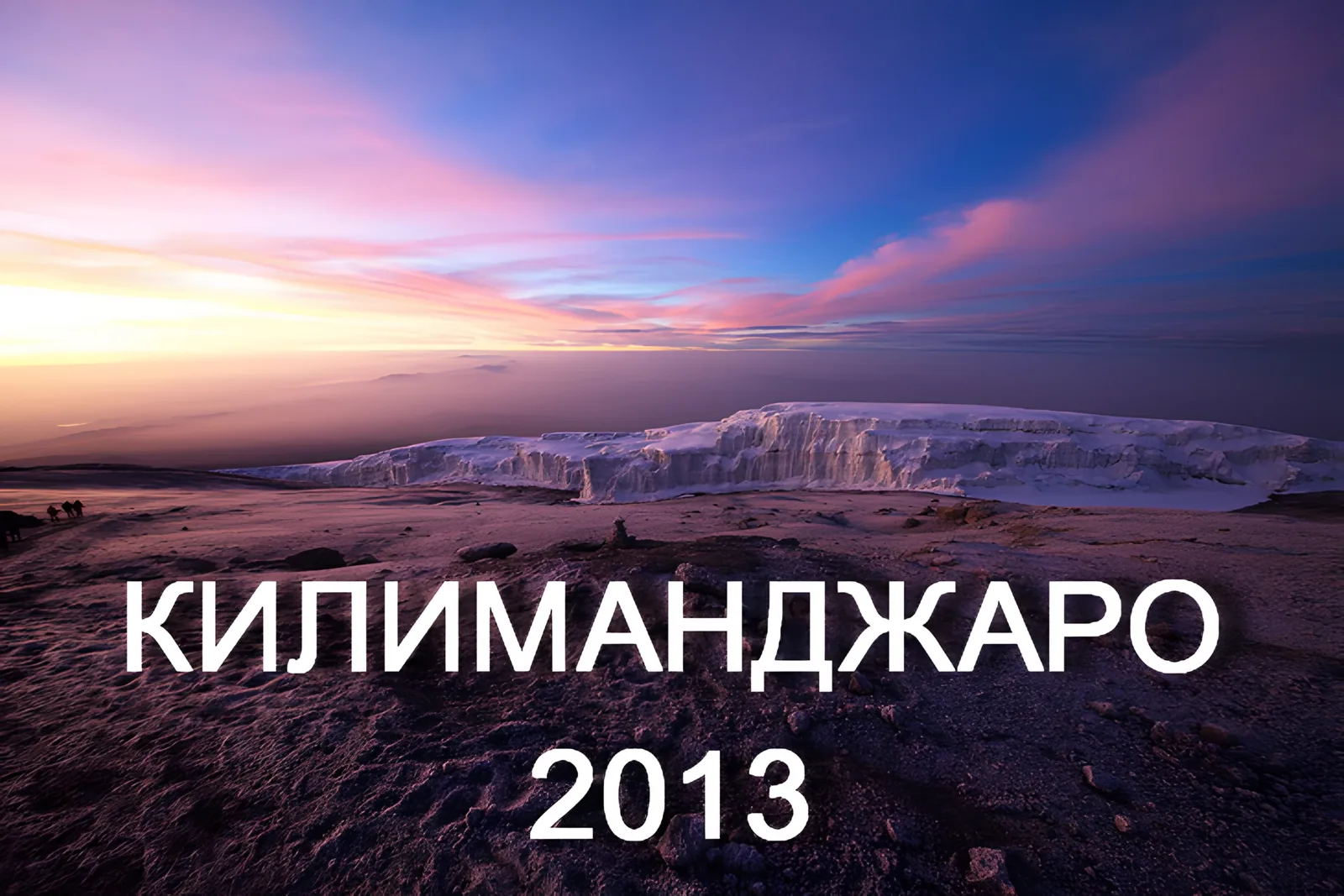
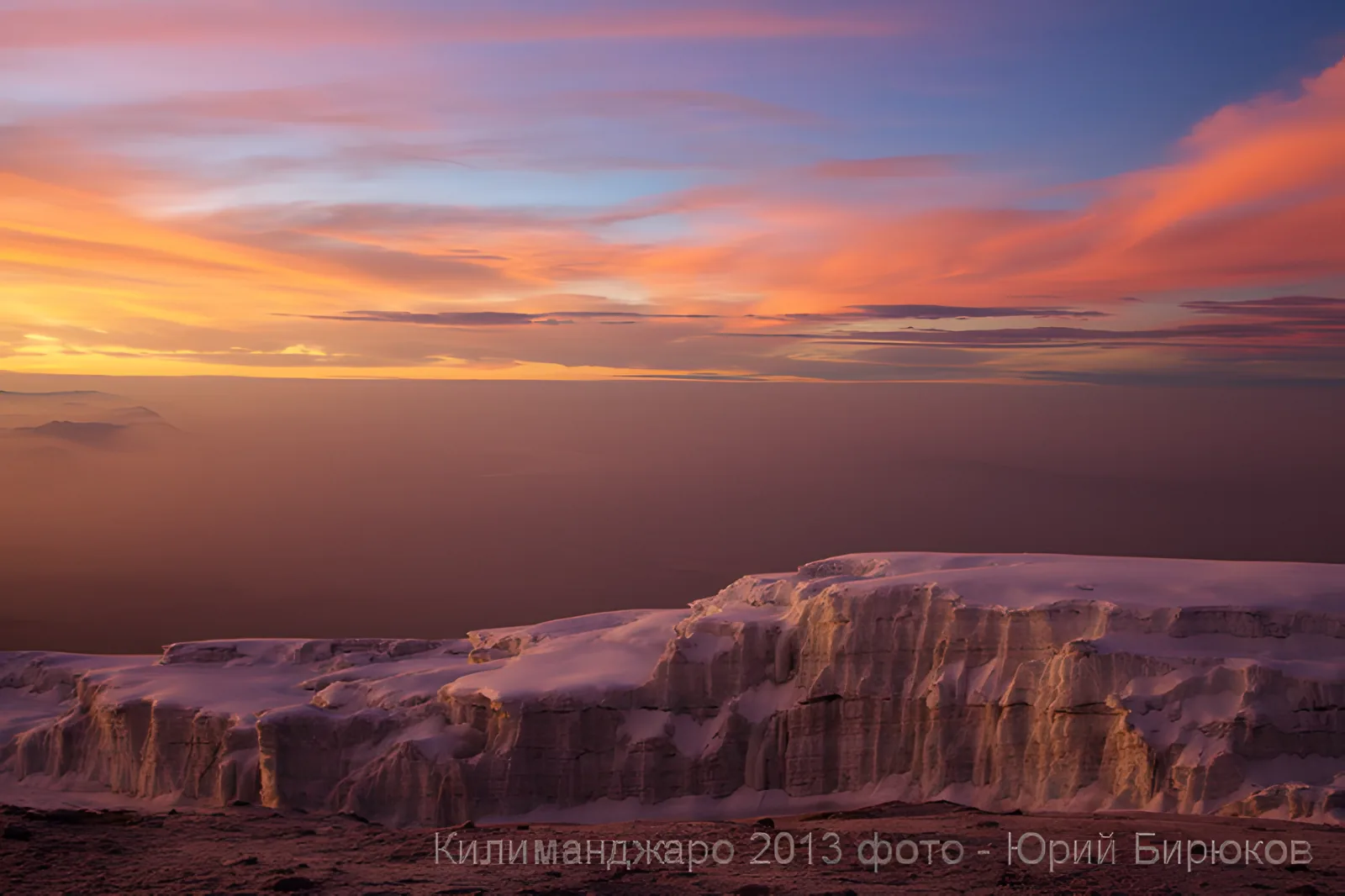
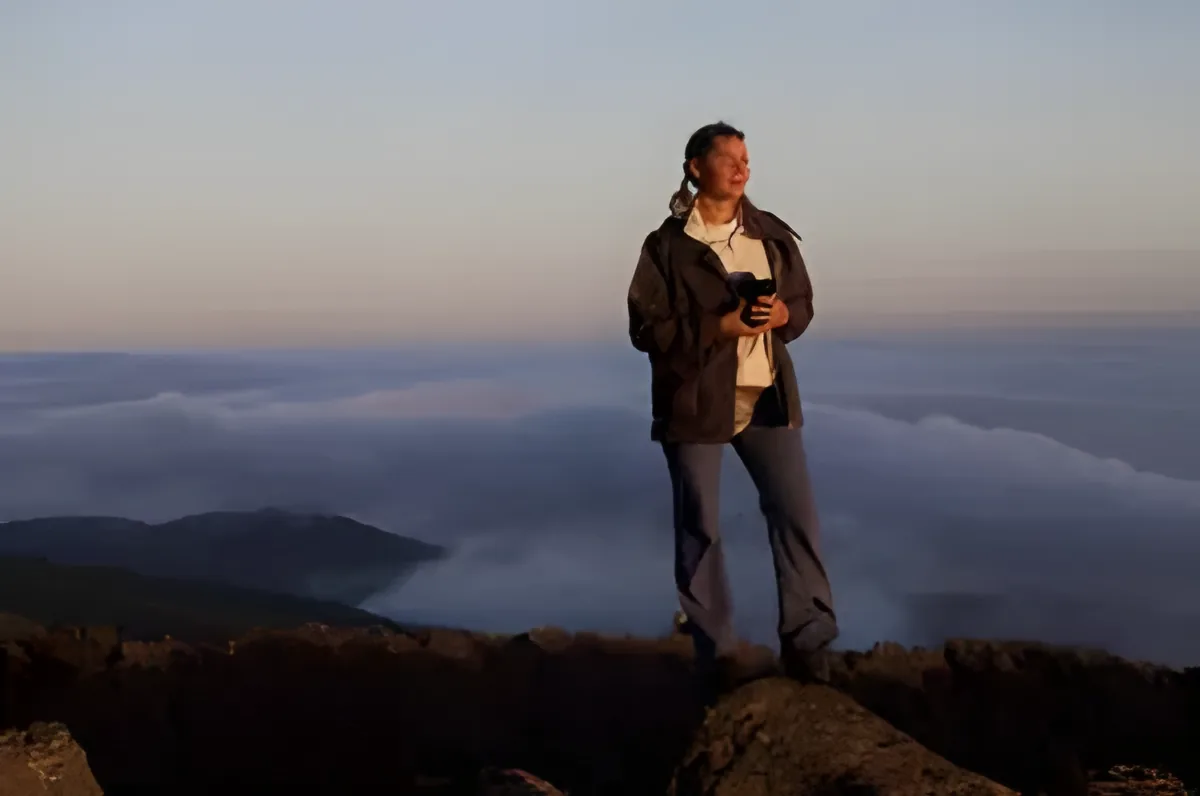
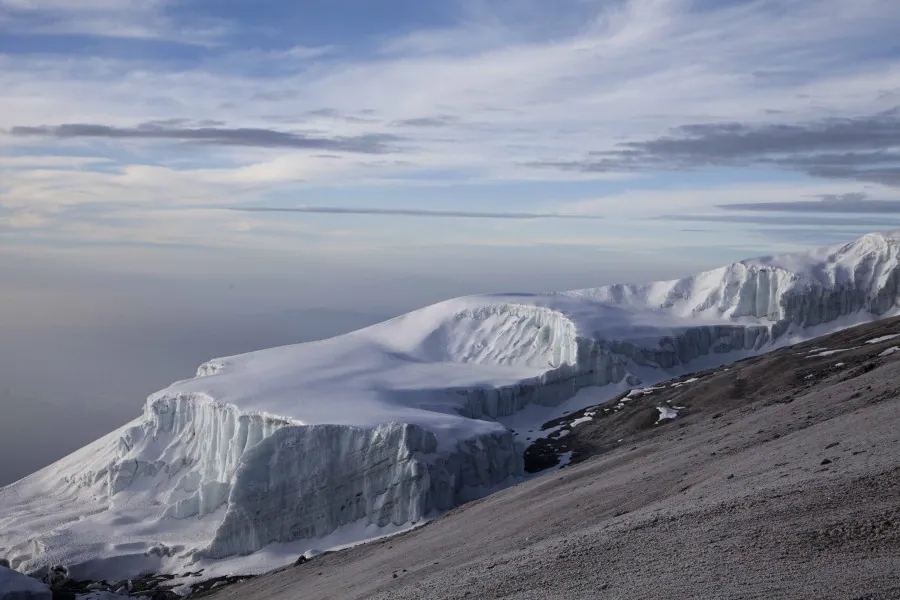
Kilimanjaro. I am standing on its upper plateau – it is almost outer space. An ultramarine sky, pink snows along the rim of the crater, a lettuce-green line of horizon. Later I will be asked: is it really that blue up there, the sky, as in the photo? – Yes, I will answer – very.
The icebergs of Kilimanjaro shine blue, the stones sparkle in the frost. Yes, this is the most beautiful summit of my seven five-thousanders. The seventh: can it really be?! Yes, I have had good teachers: I take off my hat, my bra, I put aside my ice axe and my paddle, in a deep bow, or in whatever other pose;) with tender gratitude to these heroes and amazons – Viktor Olifirov, Edmund Shchebalsky, Serhiy Kryzhanovsky, Svetlana Shchuper and Ksenia Vitenberg.
For me – compared with the others in the group – walking comes, as always, easily. I think that is a talent. The talent of choosing good teachers. But that is for another article.
The snows of Kilimanjaro – this phrase is very out of date, there is very little snow. By rumour, 90% of what there was has melted. I stand, hardly breathing. Breathing is noticeably useless anyway: I take a full breath and it is empty! The energy is spent on the effort and does not come back – an interesting effect. I had never before experienced such an obvious lack of oxygen, not on Elbrus, not on Ararat, not on Kala Patthar. Yes, it is almost six thousand here, and at such heights every 100 metres of vertical gain is very much felt.
My route is called Marangu. Three trails lead to the summit of Kilimanjaro itself, which is Uhuru Peak. Everyone comes back down by our Marangu trail**.**
The first white climbers are already coming towards me – happy, and unreally white-blue-green, their faces drained of blood by the lack of oxygen, like masks. It is hard to believe that I look the same. Enchanted, I freeze. My guide, a young black man, does not let me hang there: camera, photo, friend – come on, forward – another 5 minutes. He takes my little rucksack from me and is very keen for me to reach the victory sign with the words «Congratulations UHURU PEAK – 5895 m.»
At 6:30 on 20 January 2013 I stand under the cherished sign. White as an iceberg, where has the African tan of the Serengeti gone? Slowly, on a long inhale, I take off my mountaineering glasses and, gazing at the horizon, I stop on the outside and… deep inside. Time stopped too…
Two weeks earlier:
Moscow.
8.01.2013
At Vnukovo airport there is an unusual rush at boarding. The flight has been delayed by three hours – it is snowing in Istanbul. The transit passengers are worried: they risk missing their connections. The airline staff run about nervously: the Turkish Airlines representative – a little blonde with curls loose down her back – is typing something fast on the computer, her ringlets bouncing, a man comes up from the side – a colleague. She says to him:
– Why did Nastya leave, I can’t cope here alone! – (not looking up from the keyboard).
He, all relaxed:
– Got hungry, probably.:)
The queue, waiting for departure for the 4th hour, burst out laughing.
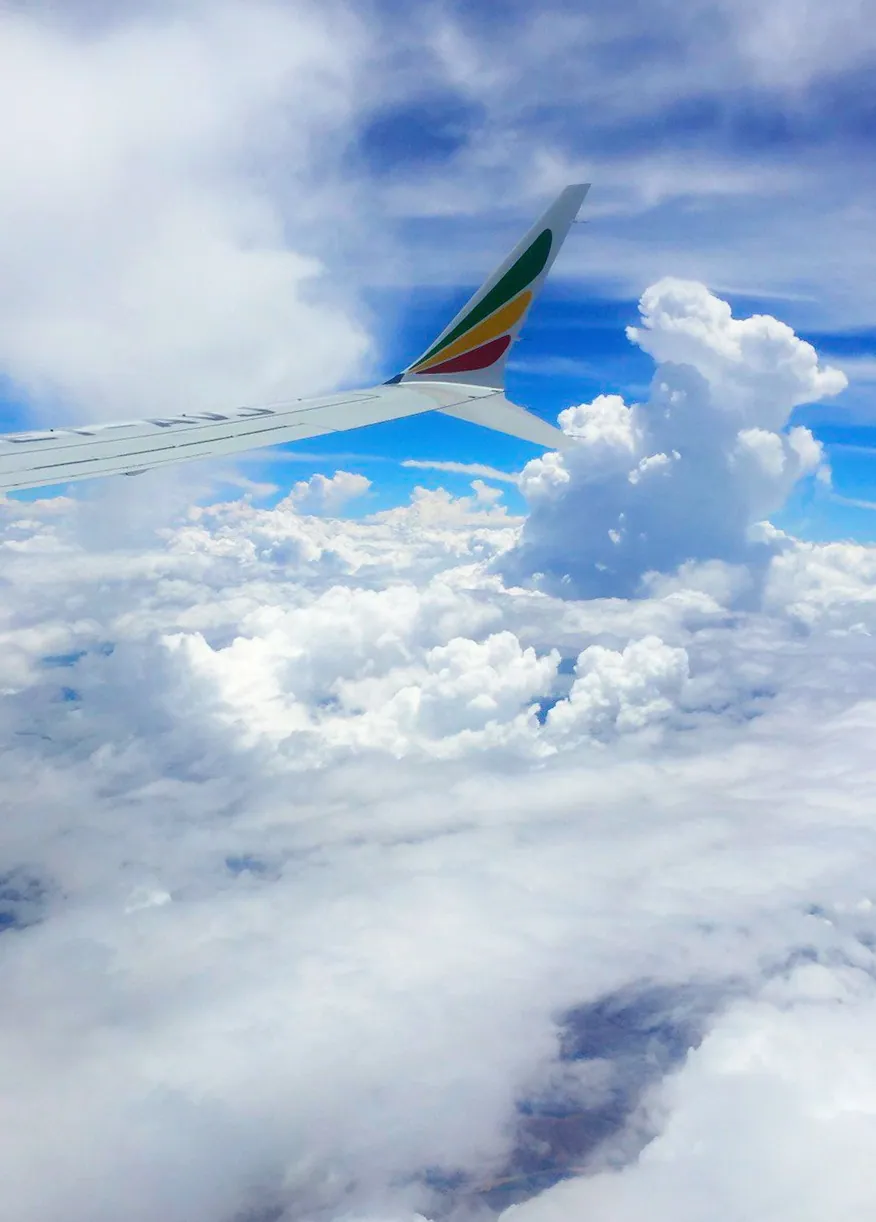
The snow gets heavier, snowflakes stick to the window, inviting us to admire their shapes and sizes. We take off beautifully: the pinkest clouds beyond the sunset open up over my wing. Take-off is like sunrise, the start of a journey is like spring! I declare the sunset a sunrise! And for a long time we chased the departing sun.
The plane heeled over, turning and settling on its course. And the sun, by now hysterically orange, popped out alternately above and below the wing. Flirting, it stretched out a lettuce-green ray, and the air coming out of the turbine phosphoresced like a “Jedi’s sword”. Finally a scarlet path on the clouds – like ripples on water! – reminded me of Cannes, solemnly and unrealistically beckoning!
The plane finally gave up chasing the departing day, and it went ahead – to glide, licking the sides of the Earth, leaving us the illusion that it had burnt out.
One of the most beautiful flights of mine – the seventh in the last year – and I cannot get enough of the beauty of the skies. Yes, a tip – if you are flying, at check-in ask them to check you in to a window seat – you can! And enjoy:)
We descended into the dark-blue Arabian night with a rainbow braid on the horizon. Dipping into the clouds, the wing tilted, reflecting as in a mirror the petrol-like swirls of the narrow coloured horizon, and revealing yellow scatterings of lights and the glowing arteries of Istanbul’s highways. Continuing the turn, we flew low over the water, crossed the dotted line of the embankment lights and came in to land. Well? How can people be afraid of flying ?? ( those who are afraid – you must read the post!)
On arrival in Istanbul the passengers almost broke into a trot, rushing to find their next flights. And there was exactly enough time to fly into the plane. We made it! But the luggage did not – we would find that out already in Dar es Salaam.
The plane is half empty, it is half the size. Not so very many people fly to Tanzania: it is very exotic, very extreme. A 7-hour flight. I stretched out across three seats – thanks to my natural flexibility and yoga – I fitted all the armrests into the landscape of my body, covering myself with the little blanket they hand out for long flights – now here it is business class – and you can dream Africa.
Having slept, still on the plane, I began to look closely at the passengers and suspected that this group of Russian-speaking fine fellows were probably ours. Yes, it was them.
9.01.2013
We landed at 3:25. We came down into the thick night of the new moon. Africa breathed on us at once, hot and humid, through the open windows of the airport. Dark and smiling, like the African sky with the sickle of the young moon, the customs officers processed our visas.
Here this procedure is almost criminal: they took fingerprints and photographed – only just not in profile – the tired and sleepy “mzungu” – white people. Calling us by name, they handed out stamped passports (our surnames are simply unpronounceable for them). Afterwards we learnt that the luggage – that is, the rucksacks with the mountain and beach kit – would arrive in a day. And so – from lack of sleep, with no strength left to be upset, in out-of-season mountaineering boots, relaxed and happy at the feeling of having arrived at the starting point of the adventure, we set off to settle into bungalows.
A note: a bungalow is an ethnic reed-and-palm hut, the size of a tent, standing on the shore. Blown through by the ocean breeze, it is a pleasant alternative to the dubious hotels of Third World countries. The floor is a mat on the sand, and the little beds are under romantic, ultramarine-coloured canopies of mosquito nets.
By day we swim in the indecently warm Indian Ocean, and catch up on sleep in the lacy shade – “lounging on mattresses”, waiting for one more participant and the luggage. Breakfast: toast and eggs – English cuisine, African style.
In Tanzania there is no cuisine of its own, except ugali – porridge made of something or other. And yet having a cuisine of your own is a measure of the development of a culture. Much here is as at the dawn of humanity, and in this lies the charm and the extreme of Africa.
The population has the ability to use fire: they can fry and boil. Not very fast, but they are learning, wishing to tame the tourists. They borrow culinary traditions, as well as religions – Islam and Christianity – from their colonisers. As my friend Sasha India said, presenting the exotic side of travel:
“Remember: for a black man a white man is a friend, a comrade and bread”.
In Tanzania any business is run either by Indians or by Europeans, more rarely by Arabs – after the pogrom of the 90s most of them left. Business is too complicated for the African way of thinking. In the conditions of the abundance of fruit on the hot continent, with no change of seasons, there are not just no problems – there is no reason for a thinking intellect to form. No tasks – no intellect, and bananas and passion fruit rain down on your head anyway.
Tanzanians add up two-digit numbers on a calculator, and cannot hold two operations or commands in their heads. A business exists as long as the European owner is here, and instantly falls apart and gets looted if he leaves the country. On the other hand Tanzanians run wonderfully and have beautiful long bodies. Every evening all the men and youths, a large (about 100 people) colourful crowd, play football, of which they are great fans here.
Football is a special passion of the Tanzanians. Even in cinemas what they watch is not films but old matches, and they probably know everything about football. A little further along the shore there is something altogether exotic – women’s football: large African ladies with saddle-shaped bottoms, with bows on their heads, in tight long flowery dresses, play ball. They leap lightly and sweepingly in the African way – very funny indeed. The bottoms of African women involuntarily hold the gaze, even a woman’s, longer than is decent;)
Evening – a walk along the shore. Looking among the dark-skinned people for a representative of the branded Maasai tribe, made famous by an American woman, or rather by her much-talked-about book, “The White Maasai”. And indeed we find one. A youth with round scars on his cheeks, a curious hairstyle with beads and bits of iron woven in. With a spear and a “machete”, in a red checked blanket, white anklets and sandals, he gladly shakes hands and is in the mood to talk.
The customs of this tribe seem shocking to our white culture: scarification, female circumcision. And yet psychologically their culture contains precisely the mysteries that we white neurotics lack – the mysteries of Initiation rites of passage by age – which commands respect and arouses our curiosity.
However, modern Maasai young men have difficulties living through their seven-year warrior period. Historically in this time they were supposed to:
- expropriate other people’s cattle: since, according to tradition, all the cattle on the planet were “given to the Maasai by God” – and they are only taking back what is theirs.
- preferably, kill a lion – for it is historically the main enemy of cattle-herders here.
And since both are against the law: the government invites the Maasai, as it were, to serve as guards in the big cities – as it were to do their military service. Which, although at first glance it looks like an acceptable political solution, in fact turns “everything upside down”.
In the cities the Maasai becomes like not a warrior of the harsh savannah but a “cool show-boy” with a spear – “a Maasai for an hour”. And he is perceived as part of the show programme for tourists. And we joked that probably some white girls come here to check in with a Maasai. Their courtesy, the little blanket over the shoulder and the spear are very winning;)
In the evening the lads devour lobsters and fish with their feet dug into the sand of the shore. After sunset, it gets dark at once – the equatorial effect: we are a few degrees from the equator.
A note: Dawn and sunset at the equator are always at 6 o’clock, at any time of the year. Here the day lights up instantly, and just as sharply night comes crashing down – there is no twilight.
On the other hand, those who have tripods and fine lenses have something to do: the stars here seem simply to lie on your head.
On returning to the bungalow, a walk along the shore with anticipation of the climbs and talk about equipment, mountaineering jokes and the delights of extreme – body-and-soul-developing – rest.
And what an interesting, motley group we have gathered.
Yuri Biryukov – 37. Belarus. Group leader, guide to exotic countries, an interesting storyteller – an expert on the history and cultural customs of small and large peoples, mountaineer, master of photography, author of his own photography school: looks like a lion.
Irina from Moscow – 41. Russia. With an Asian face – keen on trekking, has been to Nepal on the trek around Annapurna: looks like an antelope.
Albina, an aristocrat from St Petersburg – 29. Russia. Self-sufficient, attentive and caring to the participants, a traveller – a sensual dark-haired beauty, looks like a puma.
And the “fine fellows”, a team of representatives of intellectual sport, namely – sports poker – lads who have made it materially in big “grown-up” games.
Alexei – the youngest – 23. Ukraine. Lucky in the game – a tournament winner: purposeful and natural in communication, charming: looks like “Pumbaa”.
Oleg – 32. Lithuania. Also a professional player, aspiring to leadership: despite heightened criticalness he is responsive, with a dramatic health history and a successful recovery – he too has decided to climb Kilimanjaro – which commands respect: looks like an elephant.
Sasha – 32. Belarus. Minsk. Grown-up and light at the same time – understanding where he has come – open to adventure, humorous, moderately careful: looks like a giraffe.
Two Igors – the First – 30 years old, Belarus. The initiator of the African adventure for the whole team of lads – reliable and sturdy – keen on triathlon: looks like a buffalo.
The Second Igor – 25. Belarus. A successful poker player, in the world of numbers he is simply a genius. An athlete – almost an Apollo: clever, confident, self-determined, graceful in body – looks like a cheetah.
So that is the big African five-eight in my team. And I with them, clearly, am also an exotic character for them, preferring to be in the trees: like one of the local species of predator.
Such people, curious for their philosophy, style and experience – each with their own drama and manner of expressing themselves. So I recommend travelling “like a grown-up”, if only for the sake of such unexpected company – it really does broaden your outlook, to contemplate someone else’s way of life and thought, especially from above)
10.01.2013
We set off/cross by ferry to Dar es Salaam – the former capital of Tanzania. It is good to buy a local SIM card with internet straight away here, and adapters for charging in hotels – mind you, the socket standards here are different.
We look at the city – it is a little like South India, only cleaner – of course, Kanyakumari – the southernmost point of India and the whole Indian state of Kerala sent their ships here across the Indian Ocean for several hundred years.
A scorching sun, we walk on the shady side of the street. The central hotel – I recommend going up, if only for the wonderful views from the observation deck. We go into a pharmacy for malaria pills /for those who have not yet insured themselves with pharmacology/, and sun creams – here you need a protection factor of not less than 50, otherwise by evening you will be competing with the lobsters. And it is also good to buy a wide-brimmed hat here. A cap, with the stooped posture characteristic of European men, will give you a burnt neck, ears and nose. Open yourself to a new style, here it will be appropriate.
On the way back, boarding the ferry, we watch a cruel scene: a guard, convincingly though not effectively – with a blow to the chest – turned away an importunate beggar – a ragged youth with an outstretched hand, a sacrificial face and a “running line across his forehead”: “ – White man, what have you done for Africa!” addressed to our lads with huge lenses slung over their shoulders. After a second blow from the policeman, to the head, with his lips bloodied, he goes on, already bent double, stretching his hand out to our white lads, and is lost in the crowd on the quay.
Evening. Once again we explore the length of Tanzanian minutes: while waiting for supper on the coast 10 minutes equal 1 hour. The bill greatly amuses the lads: all the dishes lined up in a column add up at the end to a doubled figure. Albina notices and says it, and it doesn’t work out – the African waitress with a tight little bottom – agrees, and the bill is easily cut by 100 bucks. Bitten by mosquitoes and cheerful at the staff’s cheek. We head off to the bungalow.
On the way back we fend off our guide Yura from the clingy friendship of an active native. It really is outrageous that every dark-skinned person tries to levy a tax for photographing: huts, hens or boats on the shore, with the words – “I am for mutual respect – this is my village’s boat – give money, my friend”
The day ends with a game of Chinese poker with a deck of cards with Kilimanjaro on them and with the beer of the same name. After all we have “gambling people” on the team, and this should give them back the feeling of “home”. And I, as someone already finally deformed by my profession – a psychologist – do not deny myself the pleasure of observing the players, considering that no other pleasures are expected yet)
11.01.13
In the morning jellyfish sting those who didn’t get stung in the evening – Africa’s initiation – for another two weeks there will be scratched stripes on the body as if from whips.
We set off for the airport. An African cockroach, running around the bread bin in Duty Free, poses, wiggling its whiskers, which greatly amuses the lads. A quick flight, jeeps meet us with a joyful greeting from a dark-skinned safari guide, we settle into a spartan hotel: the “fine fellows” are in shock.
12.01.2013.
Ngorongoro. Safari – First day. A crater 12 kilometres across – naturally fenced in by mountain ridges – a paradise for animals. In its centre is an alkaline lake with a pink, long-legged cloud of flamingos.
The lake is poisonous to the point that no grass grows on its shores. It has dissolved in itself the aftermath of lava activity, and it is quite impossible to swim there. In the waters of the lake no creature swims, except one local alga. And the only creature that eats this alga is the flamingo, which is why it is pink.
Here the animals are represented in all their African variety. And on the first day we saw all of those listed below. To our amazement, they had absolutely no thought of fearing us and hiding. A person in a tin can like a jeep is not read by predators as edible, but getting out, or climbing onto the roof, is categorically forbidden – one paw would sweep you off and you would be bitten through at once. If drivers indulge tourists in these rules, they risk losing their licence. So we played at being hunters with them, under cover of the jeep’s raised roof we stuck out our photo-guns and clicked at everything that moved.
The lads with their showy lenses shot up the lot: “The Big African Five” that is – elephant, lion, buffalo, rhinoceros and leopard, and also several kinds of gazelle, wildebeest, zebras, cheetah, ostriches, hyenas, jackal, hippo and the funny warthog – “Pumbaa”.
“Pumbaa”, like “Simba”, are words of the Swahili language, and they are the names of animals. So if you have watched the cartoon “Madagascar” you already know a little Swahili: “jambo” – hello, and “hakuna matata” – no problem!
Returning to the camp, on the wooded rim of the crater, our road was blocked by a herd of elephants. “Danger-danger,” said the driver, “don’t hurry to get friendly with them, it’s dangerous!
In the evening a long table awaited us, as at a wedding. And set up under a great African fairy-tale tree were two-man tents with little mattresses inside – “good” service.
Animals – it is so emotional, such an atmosphere of childhood in the soul. Everything pure, touchingly infantile rises up, and faces simply begin to glow. Only the serious cameras oblige one to put back on a serious expression to match the size of the lens.
At night the lads photograph the sky and the huge “our” sheltering tree, lit up by the stars of the Milky Way. Around the perimeter of the camp, if you turn round with a torch on your forehead, you can light up several pairs of animal eyes at different heights. Hyenas prowl, buffalo come and loudly crop the grass around the tents – the Maasai guards are asleep.
A note: buffalo kill the greatest number of people in Africa, they are large animals with horns that have grown together across the forehead, they lull your vigilance with their herbivorous ways, and can speed up and gore you to death.
I assist Yura with the filming, chasing people with torches so they don’t spoil the shot, for which he, in his delight, pours “Kilimanjaro” beer over me. There is no moon. A sky in diamonds, diamonds in haloes – an African fairy tale.
13.01.2013.
Up before dawn. A glow on the horizon, blue rays in a peach haze. In the morning an elephant came into the camp and, like a huge spirit of the mountain, unhurriedly ate the bushes, flapping its ears. It allowed the paparazzi to come close.
Breakfast, contact improvisation with Albina in a clearing. Sasha was too shy to join us, saying, as he looked at our acrobatics, that he was fond of himself as he is.
9:00 We set off for the Serengeti.
We descend from the crater through sparse woodland. Here the first giraffes appear – long as telegraph poles, bending their necks and nibbling the low trees. We pass Maasai villages with their colourful inhabitants. In the Serengeti valley we watch the great migration of animals. Clouds of herbivores.
Travelling across the expanses of Africa after the green grass, the herbivores. Very big herds on a flat plain, all mixed together: zebras and the horned and bearded wildebeest, the little orange Thomson’s gazelle, and also ostriches – the females grey and the males black – and warthog Pumbaas dash across the road. Hyenas are met more rarely, and the lion is altogether the most coveted trophy. We saw lionesses by the road, they were licking each other and swaying lazily. Erotic and relaxed cats, living amid such clouds of herbivores – which obviously means that they have no intention of dying out, and feel superb!
A cobra – the driver points it out right by the road, and it is simply the photographer’s talent to manage to click in time – and Yura managed. And the driver simply amazes with his ability to spot living creatures from any distance.
By lunch, or rather at lunchtime, we arrive at the base where tourists are allowed to get out. A halt with coloured lizards, iguanas and little birds that beg for food.
Further on, deserted steppes and wooded foothills delighted us with Giraffes by the road, very close, ten paces from the jeep. Herds of elephants of all ages, after the ban on ivory there are very many more of them here. And the hit of the whole safari is a leopardess with two cubs.
Coming out of the thick grass, she walked along the road, pursued by jeeps. She walked a long time along the road, sometimes hissed, but turning off into the savannah, she lost the cubs in the thick grass, they mewed funnily and jumped, flashing their thin little tails. The spotted mother led them back onto the road. Six jeeps after her, overtaking each other in turn, hunted with cameras.
Tanzanian drivers are very solidary – they pass it on by Motorola radio to one another where a predator has been spotted – and that means that all the tourists in the area will soon gather for the “tasty” sight. The jeeps very carefully give each other access to the animals. If a car has stopped for a long time, lions may decide to make use of a good source of shade and lie down under the jeep itself. The drivers move off unhurriedly, trying not to run over tails and paws.
We spend the night again in a tent camp, now on the plain deep in the Serengeti, fenced with barbed wire. Here Yuri Biryukov will take photos of the most stunning Milky Way. And also of an African hare.
At night the valley is full of prehistoric sounds and smells.
14.01.2013.
Dawn in the savannah is in our plans. An early rise, in pitch darkness. Thermoses of tea wait in the covered dining room, and then we set off at once.
The huge African sun and a horizon of acacias. It rises fast and gets light at once. The dawn catch – a cheetah and three half-grown cubs, she cleared the road in one big leap and the proud cubs with their white manes followed. They are scanning for a herd of antelope.
Returning to the camp, very close to the entrance – lions. Oh, so it was they who were loudly eating someone in the night! A pride with two young males.
A note: the age of male lions can be told by the mane. In the young it is short and pale, and with age, when the male matures, the mane grows and darkens.
Deer and zebras and warthogs we no longer even remark upon, like old hunters spoilt by spectacles.
A transfer to the volcano. Lunch – the already familiar square little box with the invariable set: juice, egg, cake, banana, samosa, a leg of tough African chicken and a sandwich.
A stop in the place set aside for it. I hunt an iguana – a blue-and-red beauty with rough fish-like scales, caught with quick reaction and a headscarf – which protects from poisonous bites. Her tail gives away that someone has already hunted her. In the photo with her in my hands I have big eyes – well, of course, I am afraid of her)
One jeep, briefly and in good time, breaks down in a very beautiful place with a view of Lake Natron and the volcano Ol Doinyo Lengai, wonderful! We document the views and drive on – now to a real village of the Maasai tribe at the foot of their sacred volcano, where according to local legends a god lives. It is to visit him that we will go this night.
Yes, in our programme is a climb of the active volcano Ol Doinyo Lengai, which erupted in 2009. Here the ground has not yet overgrown with grass, there are many faults and cracks with a white, soda-like crust, along which the unique alkaline lava flowed. It really is a unique volcano – a soda one, not a silicon one like all the others in the world. On the approach to the summit we will be met by sulphur fumes – of the living mountain – the Great Rift Valley.
A note: in a few thousand years Africa will split into two: West and East. This will be the result of the natural movements of tectonic plates.
But for now this great division is still in progress, and the Indian Ocean has not yet flooded the Great Valley. The ginger Serengeti with the poisonous Lake Natron, fringed with mountain ridges, with breathing volcanoes, warmed from below by lava, celebrates its manifestation of life on Earth.
A note: the Serengeti is not only the greatest zoo of the planet, but also, according to the latest research, our cradle – the cradle of humankind. It was here, when the dense forests in the valley disappeared, that the anthropoid apes were forced to master stable upright walking, and their hands were freed for further becoming human.
In the village we are met by Maasai girls and children jumping over something like a skipping rope. In the camp, white beaded ornaments laid out on the grass and very black Maasai women with white collars with flocks of children, chirping like birds in the hanging “knitted” nests beneath which our tents are pitched.
And now to sleep, for at midnight we climb the volcano Ol Doinyo Lengai.
“Hardcore”, as Oleg would put it later, but we will learn that in a few hours.
15.01.2013
The 15th of January began: we took trekking poles, and for those who had none they brought wooden ones, climbed into the jeeps and drove to the foot of the volcano. The local guides – there were three with us – repeated several times:
– If anyone really finds it hard, don’t keep quiet, say so, and one of us will take you back down.
We assumed that at dawn we would all be at the top to meet the “sunrise”. The group, full of enthusiasm, decided that all would go up.
First we walked a long time through tall grass, then, jumping over cracks, over frozen lava sprinkled with volcanic sand. Footwear slips, the surface is unreliable. Further on, after 4 hours of climbing, when the slope became really steep, we were going on all fours slipping in the sand and clutching at rocks with our hands. Down there, walking through the grass, the boys were still trying to play “guess the person”, the rest wondered and silently waited for them to guess to shut up – it is easier to walk that way, for everyone.
Then the guides proposed splitting the group, the participants’ pace was clearly different. And we went in two groups. I go with the men, the guide of my group is a tall scarred Maasai warrior in modern boots, evidently given by tourists, the other guides in homemade sandals made of car tyres. At the stops we joke, putting forward theories about Maasai culture and the secrets of our black guides. Sasha about how Maasai shamans, having told fortunes from the entrails of a sheep, decided our fate. And then the guide turns round and says, reproachfully:
– No need to mention the word “Maasai” and laugh.
A short pause hangs. We begin to justify ourselves in chorus: the Maasai are “very good”. Sasha says, I wasn’t going to translate to him what we are saying here, but they are a warlike people, we must be more delicate.
The Maasai begins to walk faster, which looks like revenge on the whites.
Following him up ahead, in soft slippers, slipping more and more, I recall sadly my mountaineering boots left behind in Arusha. At some point I decide to stop, and though the summit is already near, I say to the boys:
– I will stay here until dawn. I am scared in my little slippers. I am not a boy, to charge on at all costs. When I am really scared – I don’t do it.
I let the heroes pass: Sasha, the Igors, Alexei and Yura confidently go round me and clamber upward. I am glad that I am finally letting the men feel their superiority, because since we met at the airport, when I said that Kilimanjaro is my 7th five-thousander, I had felt embarrassed. And by the way Sasha looks at how I swing a 20-kilogram rucksack onto one shoulder, and quotes the classic: – Yes, there are women in Russian villages.
After them I say, lads, further on it will be steeper still, I examined this mountain on the way in, good luck, take a photo of the sunrise for me!
The others: Oleg, Albina and Ira are in the second group and they have fallen far behind – so I will wait for them.
After some 20 minutes small torches appear below, and we can already call to each other. Albina shouts: Ira’s guide has been taken ill, he has fallen and she can’t wake him, we must go down, to rescue.
– Rescue whom? Strange, the guide feels bad, not Ira?! I feel that everything is fine with the guide there. Come up, I shout: I have chosen the spot for the sunrise here.
About 40 minutes later Oleg, Albina and their guide came up to me: pleased with the thought that they could stay here, and displeased that my little torch was not yet the summit.
In pitch darkness we settle snugly on a ledge. It is warm and cosy, we hug and get ready to wait for dawn – an altitude of 2450 – that is a lot. We have come up here almost from zero. The height of the volcano is 2700. Two more torches appear – Oh! It’s Ira and the third guide – well, good, all in order! I understand that I did stay here on the ledge, and for them too. I remembered mountaineering stories: where for lack of a woman in the group, great guys died. They are tough, and even when things are really bad, nobody dares to turn back first – everyone waits for someone else to give in, and holds on literally to the death.
And here is Ira. It turns out her guide had simply lain down to sleep, since she was walking far too slowly for him. He slept and then they went on.
While a white climber ascends, a black one manages to sleep.
The lads noted afterwards for themselves what helped the black guides to keep going.
- they were chewing something all the time.
- when they stopped, they fell into a short lethargic sleep.
Curious, says Oleg: we must adopt it, we still have Kilimanjaro ahead of us.
The sky turns grey, everything is in clouds and at the point where we meditate we can see the velvety folded ridge of the Great Rift and the white lava river, like a frozen mountain stream.
An hour of meditation on a cloudy dawn. The guide, having woken up, funnily hums: Tanzania, Tanzania – with the stress on the last syllable. A couple more minutes – I want to breathe my fill of sulphur fumes, in memory of the sacred mountain, and we will start the descent. The descent is hard going, now we see where we have climbed to, and admire our feat. At first with pride and happiness, afterwards almost with swearing.
A descent that never ends. It goes on for 5 hours. The leaders’ group: Yura, Alexei, the two Igors and Sasha are still at the top, and such enormous distances that we cannot even make them out. Only the guide, with his practised eye, points somewhere upwards, beneath the summit, which is wrapped in fog. A white flower on the left beyond the crack, 10 metres across – a soda mini-crater – beautiful!
Yes, we are walking on the body of a unique volcano – the only one in the world that is a soda one, unlike all other such geological formations, which are silicon.
– Here there was a fountain of lava, says the guide, the one who had a good sleep while escorting Irina – now I am walking ahead with him. A good lad. I ask, he tells: his father is Maasai, his mother is not Maasai – Oh! So marriages between tribes are possible here. I stop, because it is beautiful, in order to remember.
I climb without a camera. It is pointless to compete with Yuri Biryukov – he is a photographer with a world name and his own photography school in the city of Gomel. So I don’t even take a camera when I travel with him. All the photos of the journeys on my website are by him.
We return to the base tent camp.
Yes, climbing does not suit everyone as a way to rest, and not everyone has energy left for admiring the beautiful views from the summit: Oleg finally becomes confirmed in the view that he is a city man and dreams aloud of a good hotel with a hot bath. I announce that I prefer waterfalls, not yet knowing that in a couple of hours I will be splashing in one of the most wonderful. Oleg does not fall silent: “well, I’m a clever man! How could I have ended up here?!” At the same time he very responsibly and carefully belays Albina on the descent, attentive – for which she seems to be very grateful. We recall Sasha’s night-time joke “ – To a volcano, in Africa, at night? – Of course, YES!” And I like all this very much, and I admire the views and the emotionally engaged people.
Irina says indignantly: this is not Kilimanjaro, this is much too steep – this is irresponsible. Yes, steep literally, we went on all fours at times – a good warm-up before a five-thousander. Now Kilimanjaro, she agrees, my group – that is understandable. I keep quiet about it and think: – what do you understand about Kilimanjaro, I don’t know, we’ll see about Kilimanjaro.
Tasty food in the camp – the happiness of taking off your boots. The happiness of having gone up: the guide showed on a bottle, a little more remains, up to the neck. The happiness of having come down – the happiness of the mountaineer.
In the village afterwards, after a refreshing shower, I could not sleep. The body sings from the abundance of sensations: the legs vibrate from overexertion and there is a lightness as if there were wings behind my back! I remember my friend Ksenia Vitenberg:
Когда умрет аккумулятор у веков И опустеет Времени Сосуд – Мы крылья вытащим из рюкзаков, И пусть нам вечные ветра несут!
I go to the Maasai women.
They are jumping, you won’t believe it, in hopscotch, drawn with a stick in the sand. They invite me to jump with them, I agree, which amuses them greatly, and soon they are dressing me in a beaded collar and a little cap, everyone is in a very playful mood.
Two hours later the group of leaders arrives from the climb: Sasha, Alexei and Igor – looked into the crater, on which I congratulate them. Igor, showing the photos on his phone to the local boys, evoked in them a reverent horror and genuine respect. It becomes clear how great the temptation of the natives is to call white people gods.
Those who are still alive set off on a walk to the valley of waterfalls. It turns out to be only me, Yura and Ira, who did not realise that it is far on foot along a gorge, though one of incredible beauty. Waterfalls worthy of the best Hollywood fantasy, and at the end, altogether, a natural temple of water – “yes, no one has surpassed the Creator!” Of course, swim! Though nobody but me dares. I go behind the water curtain and am stunned: several overhanging arches ahead, and a column of falling water into a window of light. Reverently I lower myself into the foam, swim closer, the waterfall is of such force that you can’t dive into it, only touch. You can’t get a camera here, I memorise with my eyes and my body. Magical, well, what am I if not Aphrodite.
On returning we load into the jeeps and go back to Arusha. Crossing the valley of rainbows, we skirt the volcano, now “ours”, Ol Doinyo Lengai, and with mixed feelings say goodbye to this wonder of nature. And in the evening we land in a luxurious hotel. Our group leader Yura, after the wild Serengeti, decided to spoil the participants, and this time he even manages to satisfy them.
16.01.2013
Rest in a hotel luxurious “by African standards”. Buying food and equipment, the last preparations. The body aches, going down the steps is especially impressive for its vivid sensations – good thing that for the next 4 days we only go up!
We meet the agency’s representative – Jamil, an interesting, lively Tanzanian with an intellectual face.
Information – we are going by the Marangu route: there, in the base camps, are wooden huts for 4-6 persons, don’t count on a shower, there are sockets.
17.01.2013
Morning departure for the route.
A Big bus has come. Porters load the rucksacks onto the roof: part of the things we left at the hotel, we take only what is needed for the climb. The Big bus is completely full – our group of 9 people will be accompanied by 25 local assistants: four guides, a cook, a waiter, porters – carriers who will carry up not only our rucksacks but also food, water and crockery.
We drive for about three hours from the city of Arusha through Moshi to the start of the route, which is at a height of 2200.
We arrive at a large site where there are already such buses. We unload – from here on foot. Registration is under way.
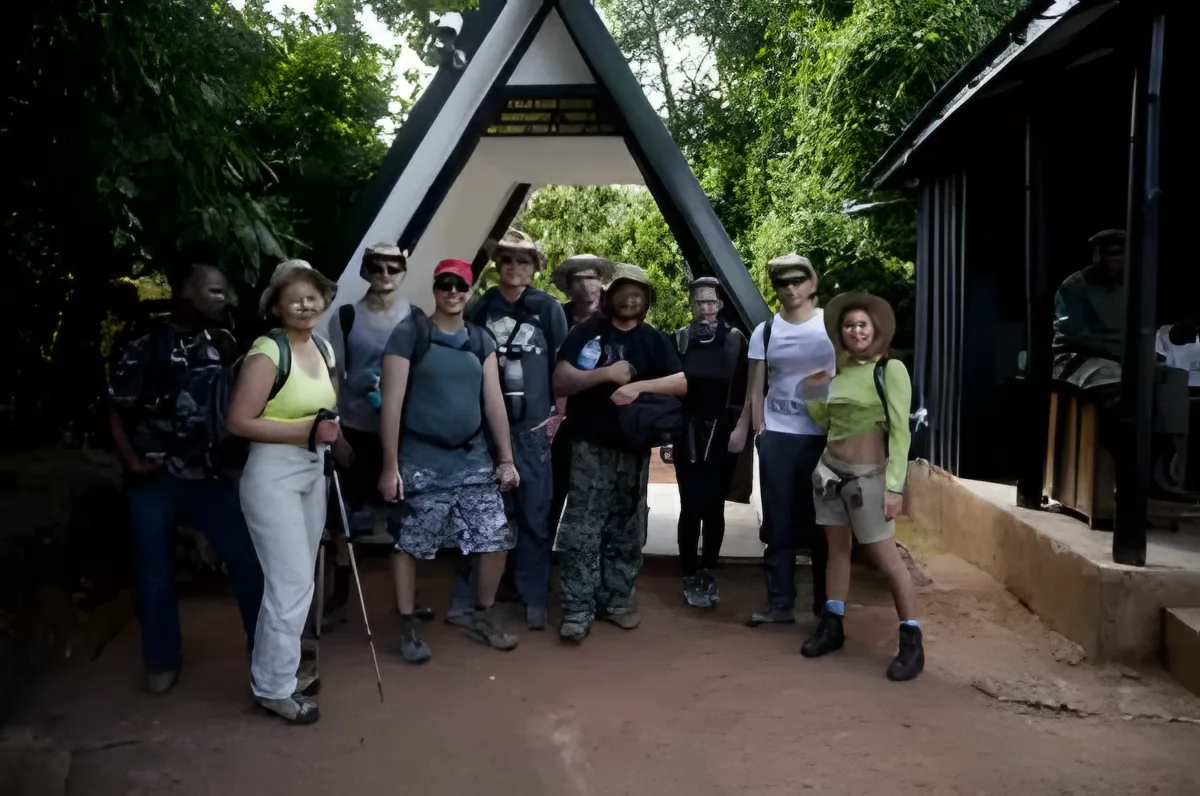
Meanwhile we settle in a clearing and again we are handed lunch boxes. Big Kilimanjaro birds – a cross between a vulture and a crow – are very keen on it. They come up and one even, from a girl who had turned away, with a beak the size of a matchbox, snatched the box. You’re in the risk zone, says Sasha – yes, the edge of the table is a risk zone. We eat, laugh, stretch and then at last we are given the start.
We write ourselves into the register with our own hands: name, country, profession, age … and stepping over the portal we find ourselves on a ginger-coloured trail in the tropical forest. A pleasant, well-trodden “client trail” with channels for rainwater to run off. The forest, as befits a tropical one, is green, impenetrable, picturesque: mystically entwined with lianas, decorated with hanging lettuce-green mosses.
An African boy on the trail with a chameleon on a stick – “give money, chocolate”. Walking comes quite easily to me and somehow, almost indecently, without a big rucksack on a climb.
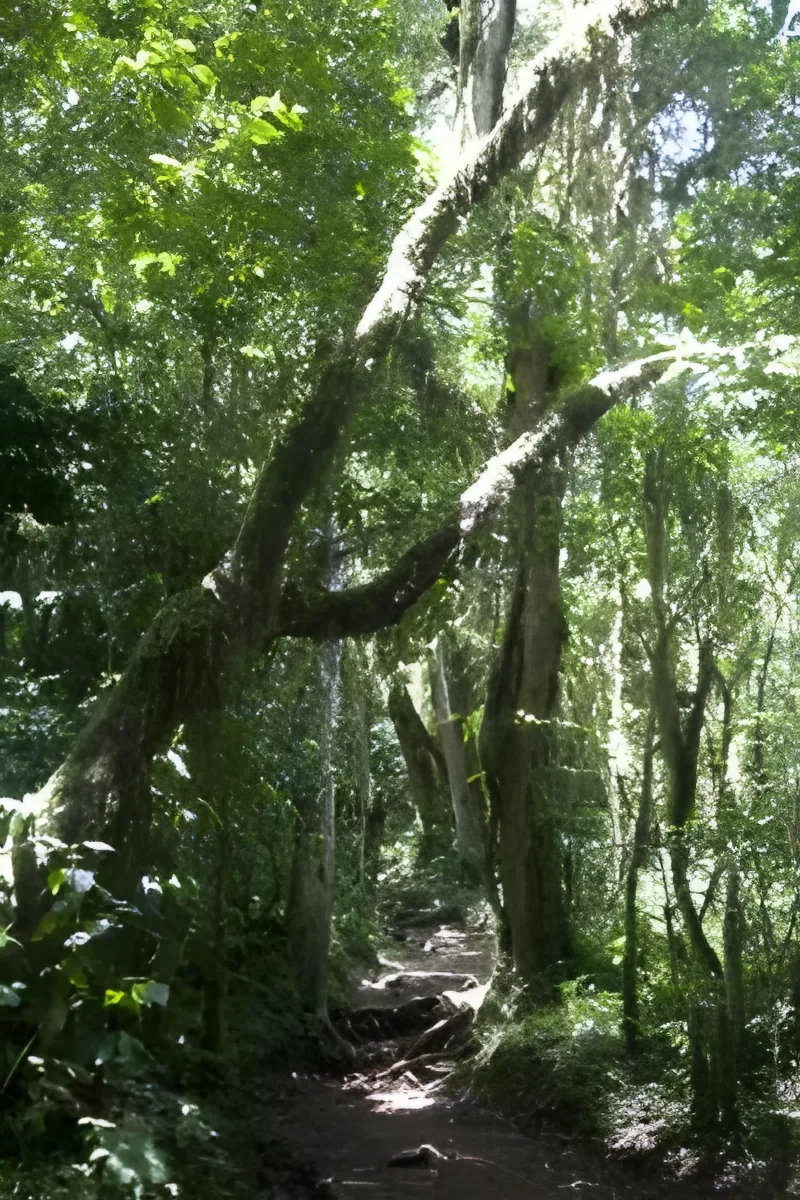
Fruits falling from above, shaped like buffalo eggs, tasting “à la passion fruit”. Rivers with little bridges thrown across, waterfalls with big red flowers. It begins to rain. And we arrive at the camp completely wet. We arrive, the first three, in 2:50 instead of the prescribed 5-6 hours. 12 km covered. Our altitude 2700, campsite. The next camp – altitude 3700, 11 km on the way
We register at “reception”. We settle in little wooden birdhouse-huts on stilts with two-tier bunks with little mattresses and a pillow. There is light, no sockets. Dry, clean, optimal. We change and go to sleep. We are woken for supper – they bring bowls of warm water for washing. On the steps of the hut we wash and trudge to the dining room. The food – soup, vegetables, pasta… And back to sleep.
18.01.2013
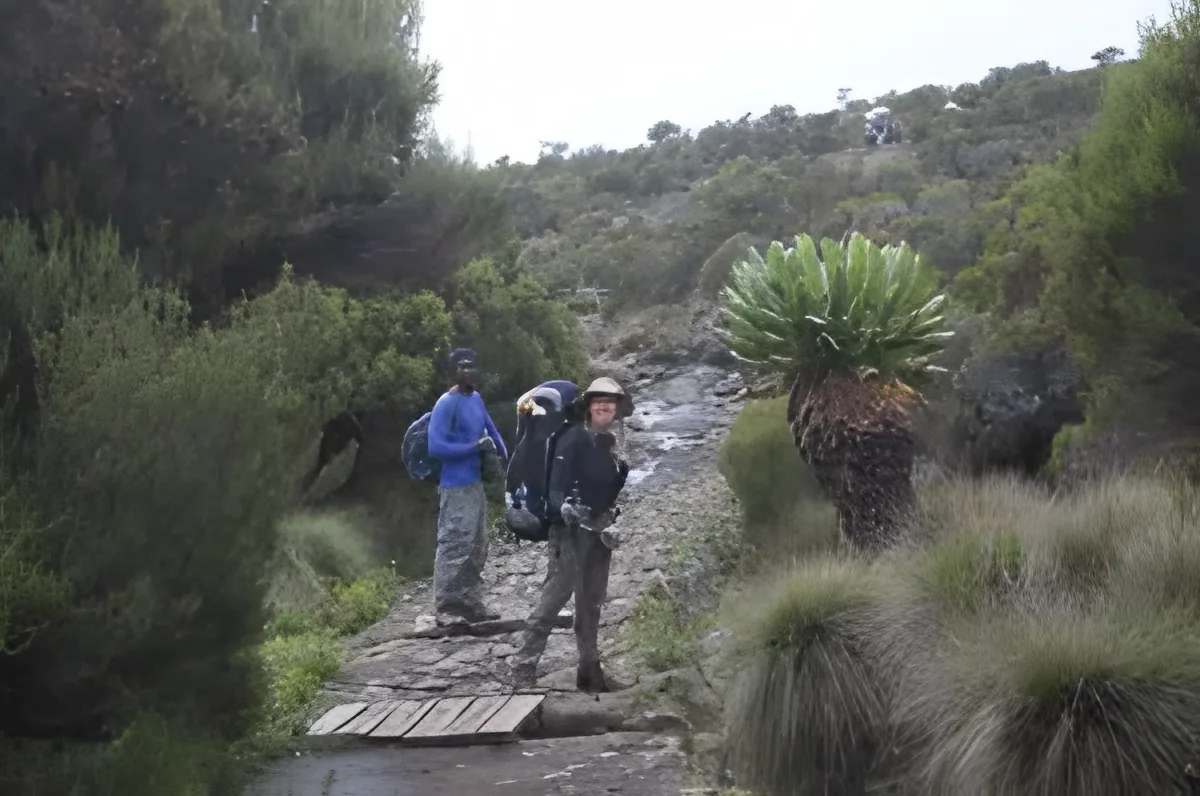
Rise at 7:00. Breakfast and at 7:30 departure for the next camp. I decide to take my own rucksack – to load up and prepare optimally for the climb. There is a side effect to this gesture too: so as not to run on ahead too much, so as not to upset the boys: competing with them, simply, by the fact of my existence. Though it turned out the opposite, and for me the reputation of a “crazy woman” has now finally been fixed – now even among the ranks of the porters.
Yura told a wonderful joke on the subject:
“Two Chukchi are walking through the taiga: one with a telephone box on his back, the other with a log. One says to the other: what for!?
– Aaah, a Chukchi is no fool: if wolves attack, I’ll hide in the box, and you?
– Ah, I’m a Chukchi too – no fool. If wolves attack, I’ll run. I’ll run and run, and then I’ll throw down the log and really go!”
Well, yes. Yura, I am like the second Chukchi – you have guessed my tactic;)
On the way we make a small detour to a little volcano – an observation point. Yes, from there, for the first time, you can see clearly! the dome of the snowy summit of Kilimanjaro. In fact this summit is called Timbo…. And Kilimanjaro is the name of the whole mountain massif.
I arrive at the camp in 4 hours instead of 5-6, even though I have a rucksack: a good omen! Albina and the two Igors arrived first, which means even earlier! We register, we settle into the huts. Now we have a nice neighbour, an Italian from Ibiza – his feet are bleeding, we stick plasters on them. Evidently not experienced.
A note: experienced mountaineers know that you must put plasters on your feet at the slightest hint of chafing. Or at once on the places of the foot that may be vulnerable. And/or go in two pairs of socks – which also protects from chafing.
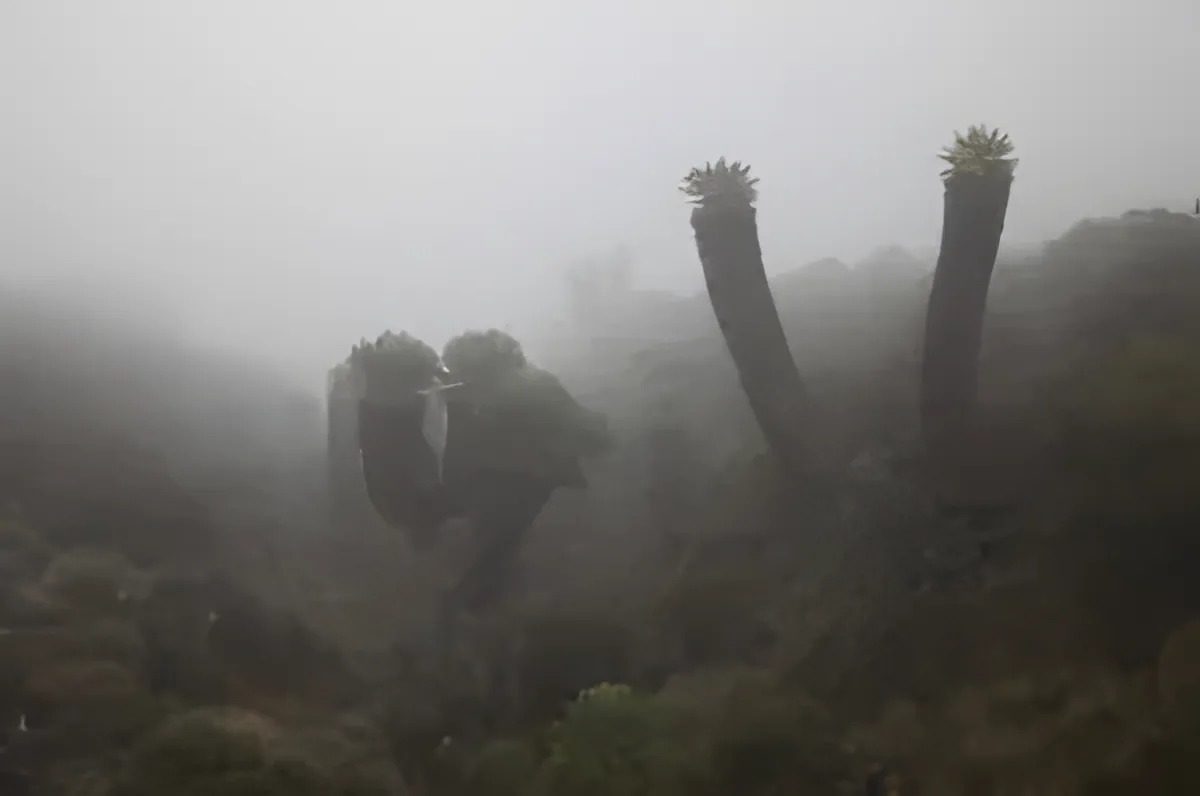
Albina and I go to a picturesque stream, in a hollow with “wizard oaks” – giant groundsel, a tree-like plant of mystical appearance that grows only here and nowhere else in the world. Like trimmed lawns on the banks. I bathe – do press-ups in the shallow water, cool my feet, after heavy boots it is bliss. Yes, it is all the same much better than what they call a shower here.
We sleep. We go to supper.
I get to know three Russians: two mature men and a girl with very made-up eyelashes: how uncomfortable that must be, here – poor thing! One of them, in answer to my questions about the big mountains, gives me the personal phone number of A. Kovalev – the leader of the Vertical group, with the words “mention Andryukha, that is, me, and he will take you even to Everest. He has already hauled many there;)
We rejoice in Russian speech. We drink tea/cocoa and I slip away for a little acclimatisation walk. With pleasure I seclude myself in the twilight mist.
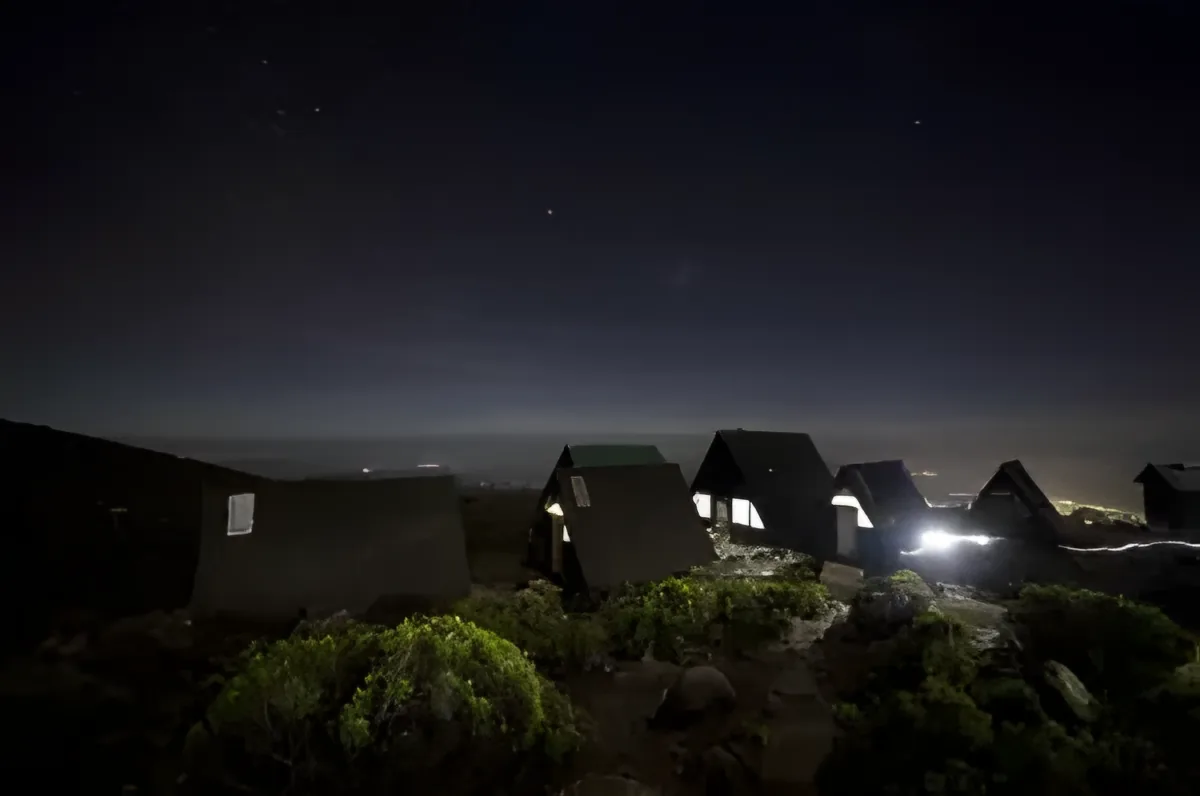
I love to break away from the group. Having chatted my fill, to be silent, staring at some beauty. I find a big boulder and meditate with my player, on the “wizard oaks” in the mist and the flowering shrubs.
I return to the camp. And here all the clouds have gone down, a soft underlay, lit by the setting sun, hiding the tropical forest beneath them. The summit has opened up, and the whole camp has tumbled out to photograph the sunset and the snow dome.
Afterwards, sleep. Tomorrow the way is 9 km, but it is higher and harder and already across a stone desert. The next camp is at 4700 m. – the last acclimatisation one, before the assault on the summit. We will set out for it at midnight. So it is not enough just to reach the next stopping place in the day, you must also honestly live there, sleep, otherwise it will be impossible to go to the summit.
19.01.2013
We set out at 7:30. A sign confirms the walk – 9.26 km, planned 6 hours. On this trail “the green ends completely”. A Martian desert – the road without changes in height, gently sloping, a scorching sun and very hot – those who realised this at once strip off on the way – here you already need “the right glasses” and a very good sun cream.
A note: in the mountains it is very important. When it is hot, at once take off what is extra. When it is cold, at once dress. When it rains, at once cover up, if you have something to cover with – otherwise your climb will bring you no joy.
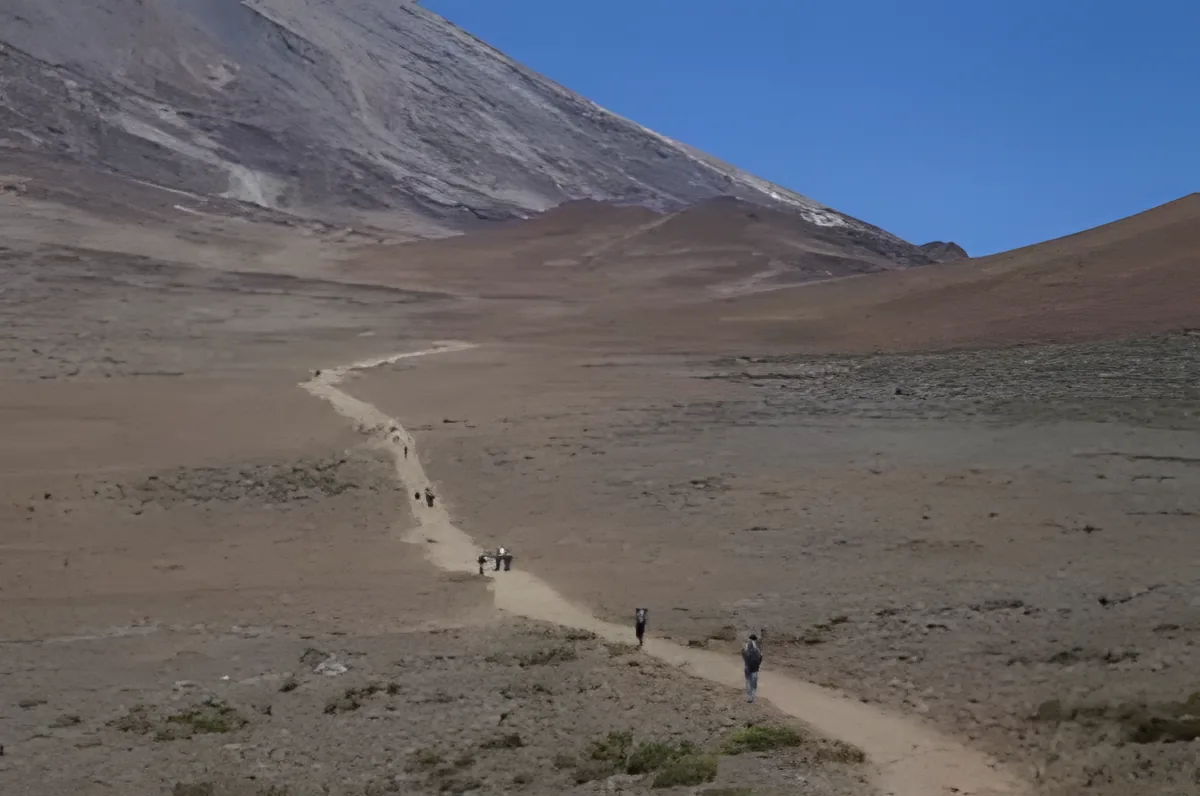
Mountains teach you to feel yourself, and if you have difficulties with that, there it will only get worse. And that is a turning point. That is good! There is a chance that the person will at last find a connection with the real self, and become more alive and strong, and larger in soul. Or not.
I arrived in 3:45 hours. Cutting across the desert. The campsite was obvious. It was interesting to go, at least for part of the way, not along the beaten track but through the primeval landscape. “Crazy woman!” the porters shouted after me, but I was already far away. The lads replied: – she’s like that, and quietly rejoiced for their own – white women. Indeed in all 5 days of the way we met an African woman only once.
Having taken a couple of stones from the “Martian desert” and registered, I climbed onto a big rock overhanging the camp. From here there was a magnificent view of the trail and of Merra Peak – 5100. Yes, the altitude is already felt – every movement upward costs an effort. Waving to my own, I invited them up: Yura and Sasha. They clambered up, then it dawned:
– A spot of tea? Yura said. The porters have already brought thermoses to the barrack.
– And who will go? Of course, me! As the youngest?!
It is warm. Hiding from the wind behind a ledge, we lie on the warm stones. We drink our tea… We photograph the birds – African crows. It is only noon. A wild thought slips in: what if we went to the top right now? It is so good lying here and the day is still long. And the distance treacherously seems trifling. But at the first attempts to move, we agree that it is better to keep everything to the plan.
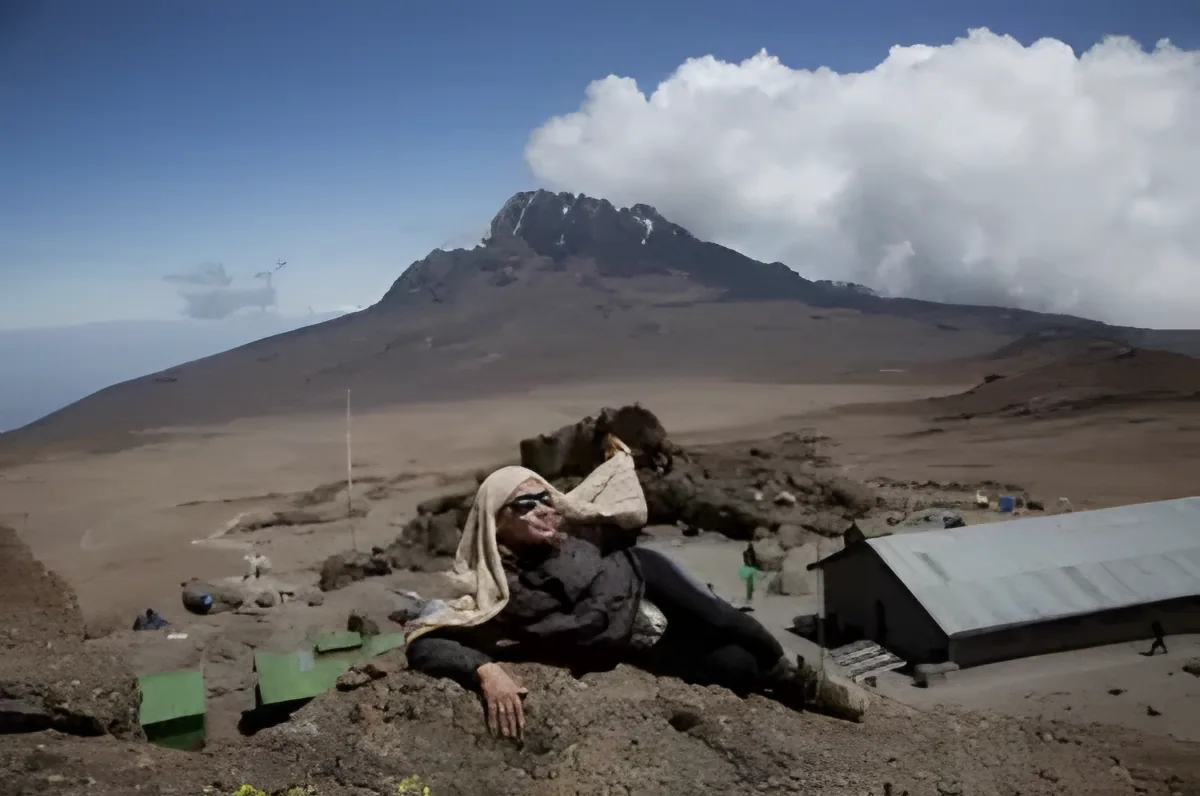
It is good to manage to sleep all the same – the climb is at midnight. We go down to the barrack. Alexei, Oleg, Albina, Ira have come: they are not in very good condition. I give Albina a massage: it is pleasant to do something pleasant – it means she has strength, someone is feeding her pills. Indeed everyone takes acclimatisation pills, except me and Yura.
Irina is asleep. Oleg and Alexei are not communicating at all – resting, recovering. The forecast is not yet known, it is not obvious that they will go on. Yes, it is hard, five-thousanders are always hard. Not hard all the time, but at some moment, everyone has their own – but very hard. And under this word – “hard” – everyone means something of their own. And with this “hard” everyone is almost alone – and looks for a way to get through it. Sometimes they do not find it – then hysterics. And if there is simply a lot of talk – it means the person does not yet find it hard. When it is really difficult, people fall silent and in the silence clearly hear each other’s thoughts.
20.01.2013
At midnight we set out. Of the group of 9, 6 decide to go to the summit, one of whom at the 5000 mark will turn back to the camp. A string of torches in our group, 3 guides, so that if anyone feels unwell and cannot go on, there is someone to take them down. An endless, steep climb.
The first hour of the climb is under way. I glance upward – the lights of the climbers mingle with the stars and it seems that just a little more, and in an hour – just a little more, and in 3 – the hope vanishes altogether, – and now there is not a single thought in my head, not even about “a little more”. When your head becomes empty, the unnecessary tension goes – walking becomes simpler and easier. Now the body does not resist, does not look for “alibis” and consolations about “a little more”. It surrenders to its “master”, understanding that there is no “exit” in sight – relaxes and moves carefully, enjoying the unusual sensations.
Here you can feel well that pain, like tiredness, is just sensations and nothing more. Sensations make me alive – it is the experience of certain volumes, movements and gravitational flows inside, in the worlds under the skin – these are very honest “uninvented” inner events about my real limits. When I have the courage to come up to these borders, and begin to “live” on their edge, they – my borders – wonderfully widen.
When it gets really hard – I stop and listen to this “hard”. This time I made myself a “three breaths” rule. If I need personal time, and above 5 thousand I usually need short “lethargic” halts, I stop. I take three breaths in and out – here they turn out infinitely long and slowed – as if there were no breathing at all, and time at these heights flows in such a way that I manage to get some sleep, and to get a second and third wind and be surprised that I want/can go on.
We have already been walking for 5 hours in pitch darkness, it is impossible to judge the distance to the ridge. The speed is not high. The altitude is felt more and more – the body cools, everyone’s feet are freezing – it is very cold. It is quite impossible to stop, there is a risk of freezing altogether, we go – the body obeys, anticipating – with dawn warmth will come.
After five hours of clambering upward, at last the first summit, 5700 – certificates are already given for this point – whoever is content can go down – But to the real summit there are another two hours along the ridge.
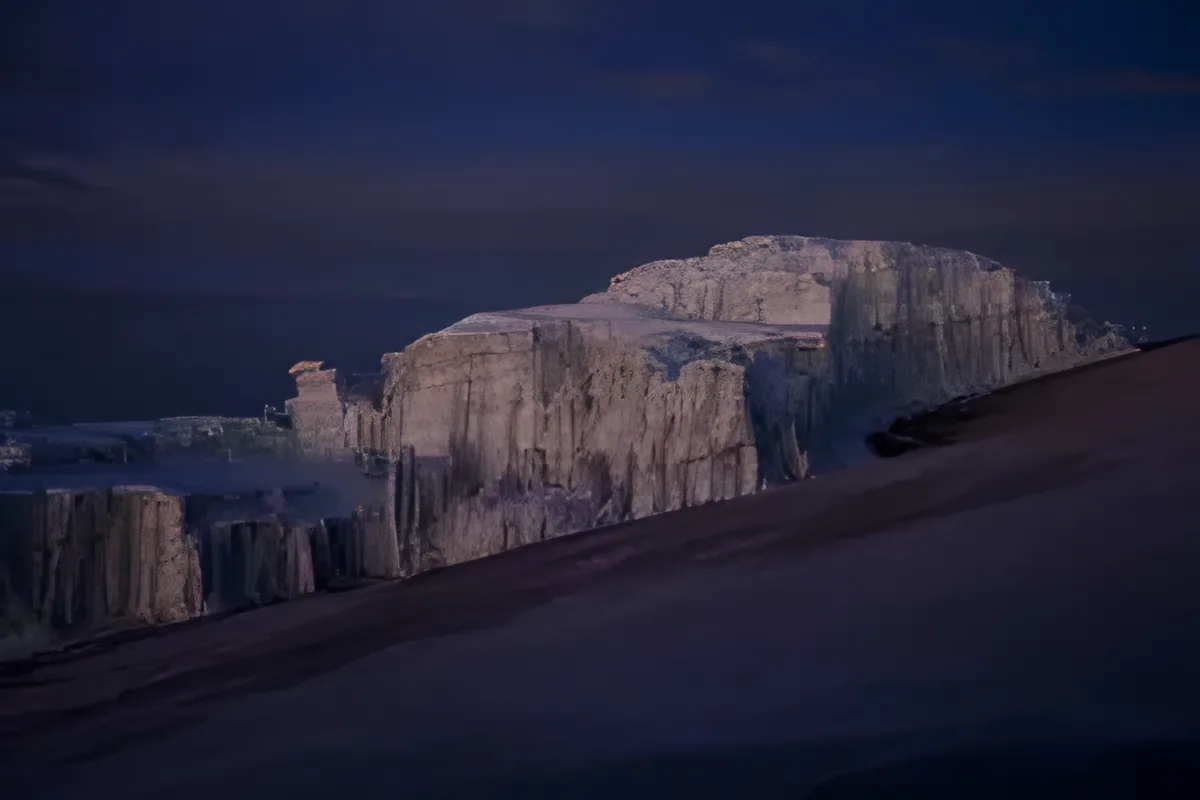
Pitch darkness, another hour until dawn. It is so cold that in my plastic bottle a flask of ice now floats. To stand and wait for dawn is impossible. I put on the remaining things from my rucksack, and we go on.
The first snow on the inner rim of the crater. The crater is huge – so we will walk along its edge as along a ridge, skirting icebergs and rock outcrops, right up to its biggest little tooth – Uhuru Peak.
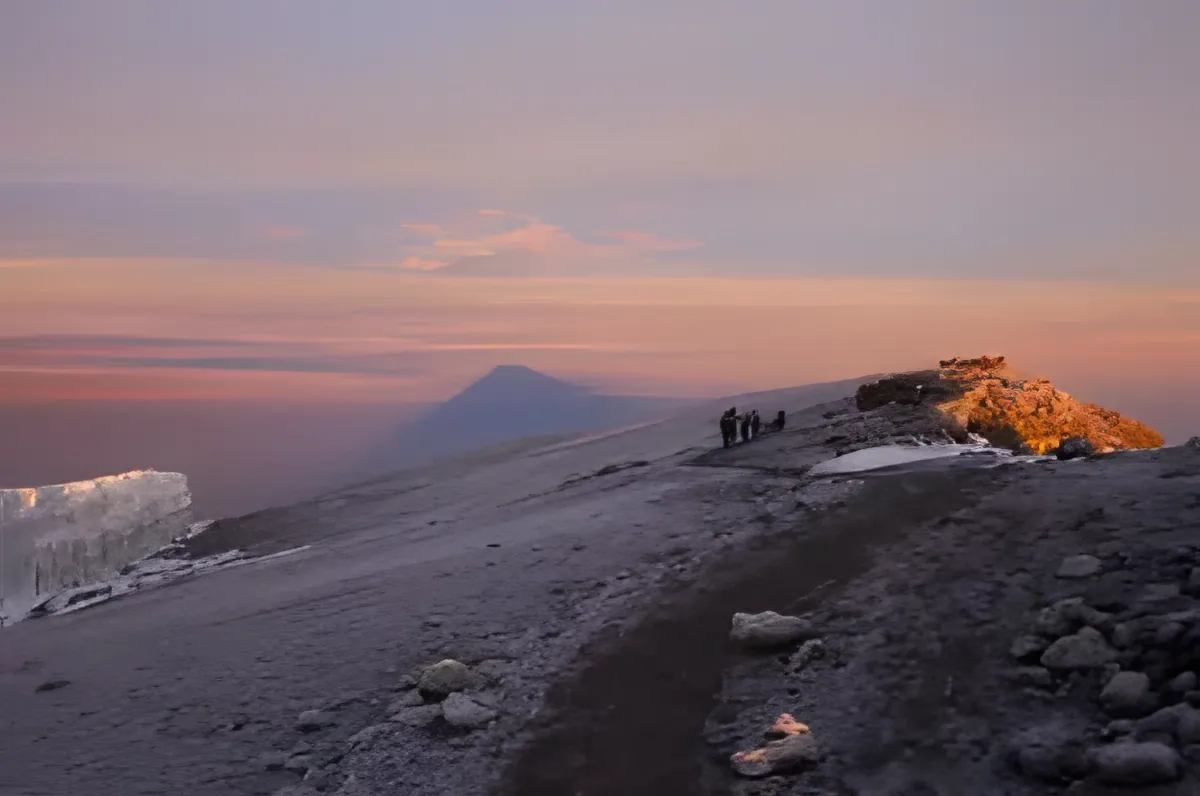
A transpersonal state – the twilight colours kindle the sunrise as in a lucid dream. Now I also feel a little sick, and when that happens I prefer to vomit – it gets easier. Mountains cleanse. Of what? Of something) It grows light in the body, and it grows light in the sky.
The men have gone ahead, I am with an African guide – what is his name? I remember asking. Remembering – I forget – yes, mountain sickness, probably. There are no thoughts – they need oxygen – and there is little of it. Pure Zen.
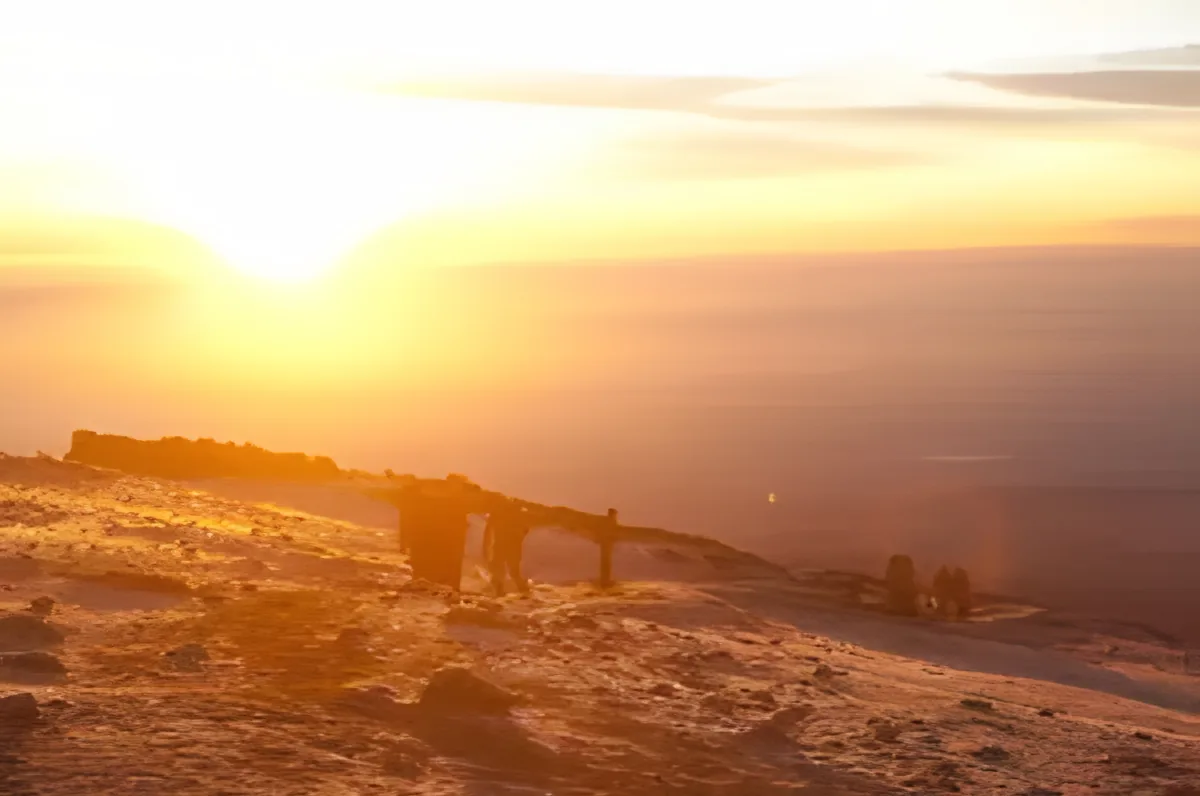
On the way cheerful climbers actively congratulate me, have their photos taken with me, shake my hand, drink kukuri straight from the bottle – who are they? – I don’t know. Well, of course, it doesn’t matter. People, who else? Solidarity is bubbling over and fills me with strength, more than the air here.
– Where is your camera? the guide asks. No? How come? You must go to your friends. Yes, yes, to the summit it’s 5 minutes.
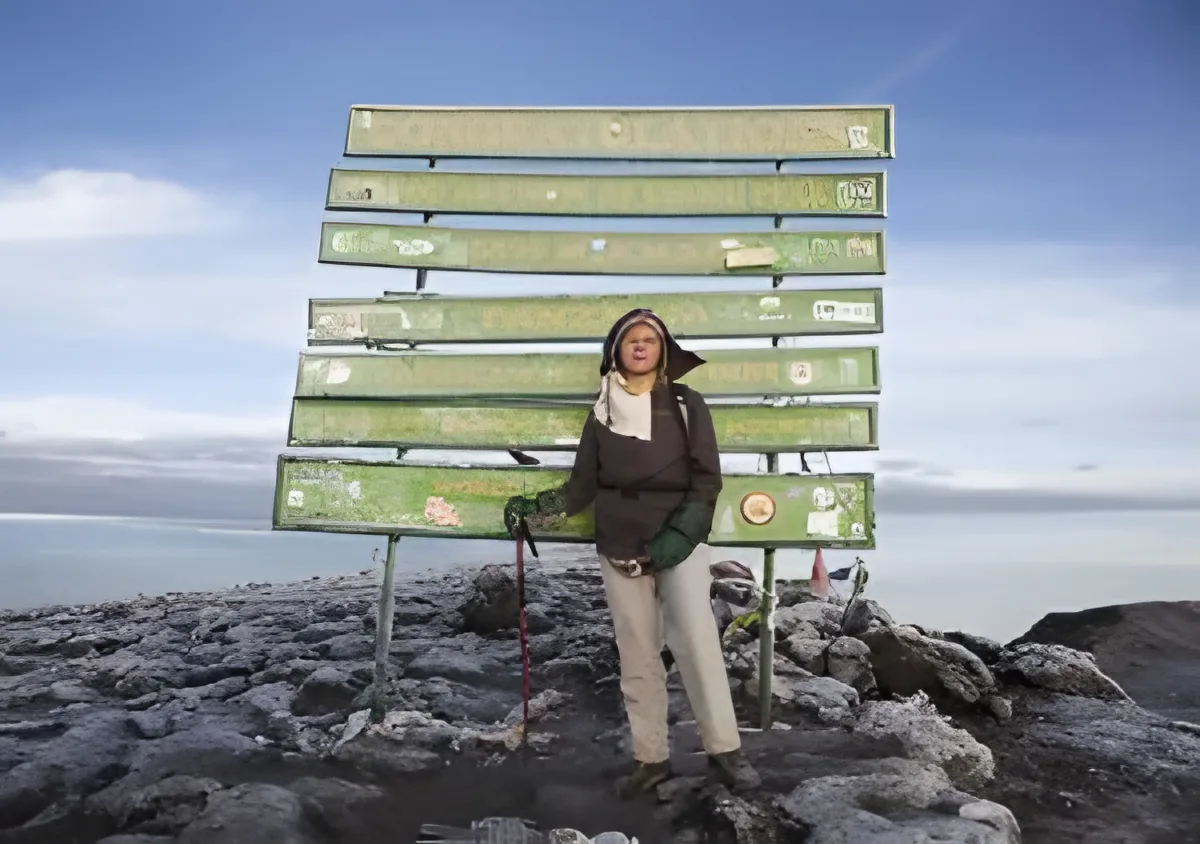
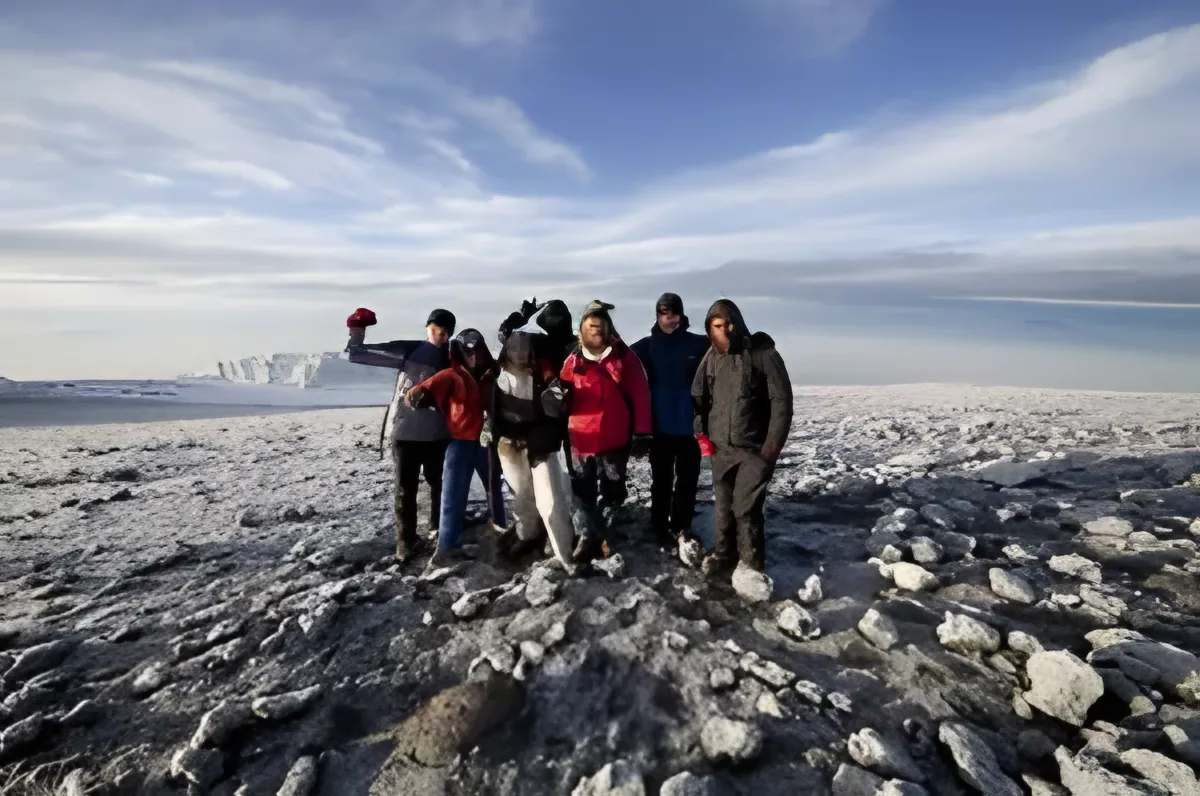
– Well, yes, Tanzanian ones. After 20, Yura scoops me up in his arms and ruffles me like a father:
– You made it.
– Well, of course. Where else would I be!?
Photos? Yes, fine, though a little indifferent – you can see it in the pictures. Well, so be it, fine. Yes, fine. It is so good, calm – no euphoria at all. Light and bright inside – this, probably, is what I am here for…
The descent at first does not look like a descent. We simply stroll along the ridge, but even after losing a little height one feels a surge of strength. Yes, stones from the summit – for friends, of course. I always come back from climbs with a trophy. From Elbrus I brought 3 kg. – now it is more modest – we are growing up:)
Further down – a big freeride over the moraine – I remembered how in 2011 in the Carpathians, in February, I was very scared to go down a steep slope. Sergey Kryzhanovsky, the guide, took me by the hand and we ran in snowshoes in big leaps over the fresh snow, leaving a long track behind us – vivid sensations! Now I took the African guide and we flew down the scree in Vibrams, leaving a long cloud of dust behind us. Now the guide was afraid, until he got into the swing.
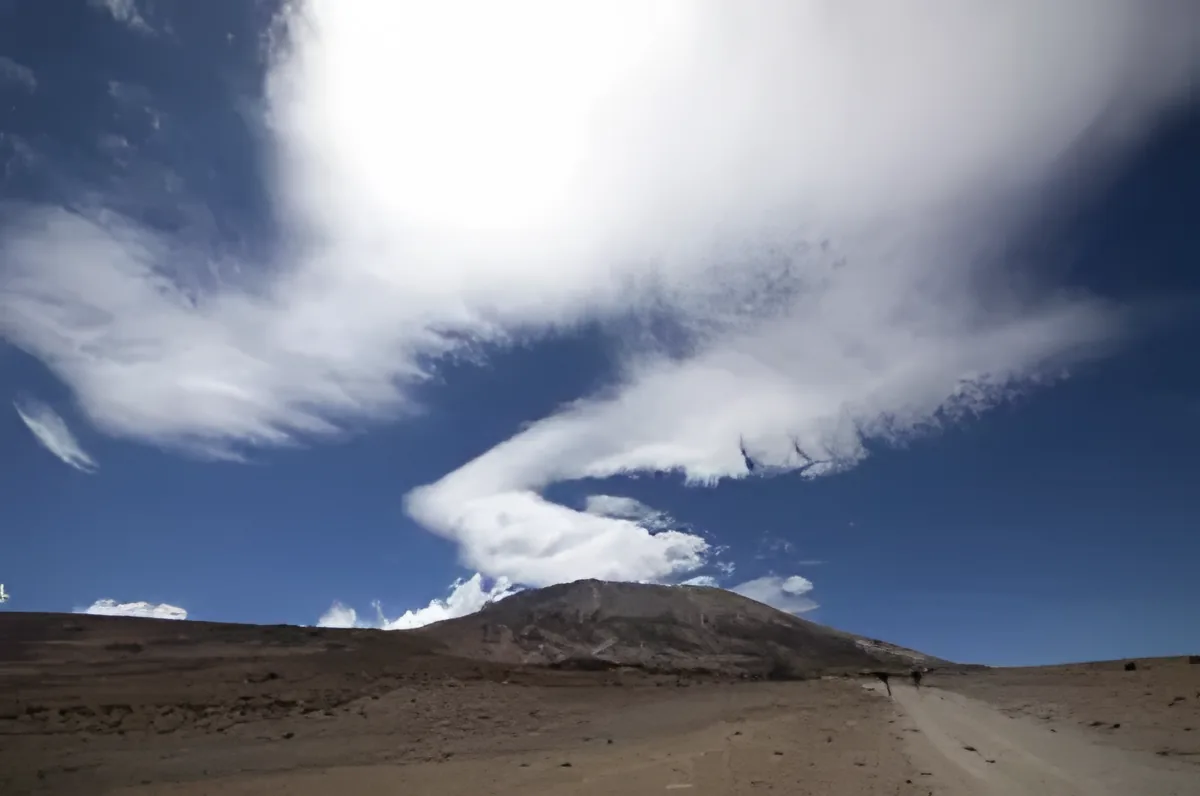
On the approach to the camp, a breather. I take out a can of cola. Yes! and it is still, would you believe, with ice! We celebrated the climb. Strange, but this drink of dubious benefit – Coca-Cola – goes down very well at high altitudes – and in Kyiv it doesn’t.
The young man – whose name “I don’t remember” – wanted to be useful. He offered vodka, a smoke and was very surprised that I was Russian and did not take part in this.
A note: Ukrainians, like Belarusians, in these countries are Russians.
And here I am in the hut. I flop onto the little bed with my arms flung out, and do not want to stir, let alone take off my boots. The body sings like a Tibetan bowl!
My head aches slightly – I swim in this sensation. We’ll sleep for an hour and go down. On the table are thermoses, tea, coffee, cocoa, a jar of “Nutrilon” baby food, food. The cooks are trying: potatoes and sweet potato in sauce, pancakes – well, where else does this happen at such a height?! The tastiest food on a climb – you couldn’t think of better, if only someone would carry it?
At 13:20 we go down from the hut at 4700 to the hut at 3700. In this one day five of us covered record distances! An ascent of 1200 m. A descent of 2200 m. – this is by height: from 5895 to 3700. And the distance is over 30 km. And all this at such altitudes – this is not the Crimea in summer. On the other hand a little lower, at 4000, such speed and vigour, that you want to: jump and dance, and turn somersaults or something else:)
You want to live. And the air is now felt as a value. You can, simply by breathing, feel yourself rich – happiness!
21.01.2013
Morning. The sky is azure, clear, with a white flourish of clouds. Yura takes wonderful pictures of the open summit. We walk briskly, stop wherever we like, photo-shoot weather.
Fellow travellers, a couple of young Austrians – smiling sweethearts like brother and sister, we chat, we pay them a compliment, Yura photographs them, we exchange contacts. Again we go up to the observation volcano, the clay under our feet is red: I gather some, for ceramic work – red ochre from Kilimanjaro.
Further on is the tropical forest, and here there are monkeys: black-and-white colobuses, we found them by their sounds. They sit in the trees like big Persian cats. Their fur is very long, flows in the wind, needs care – all day they have something to do. They used to be hunted a lot, and the colobus skin was a coveted trophy. Garments were made from it for chiefs and shamans.
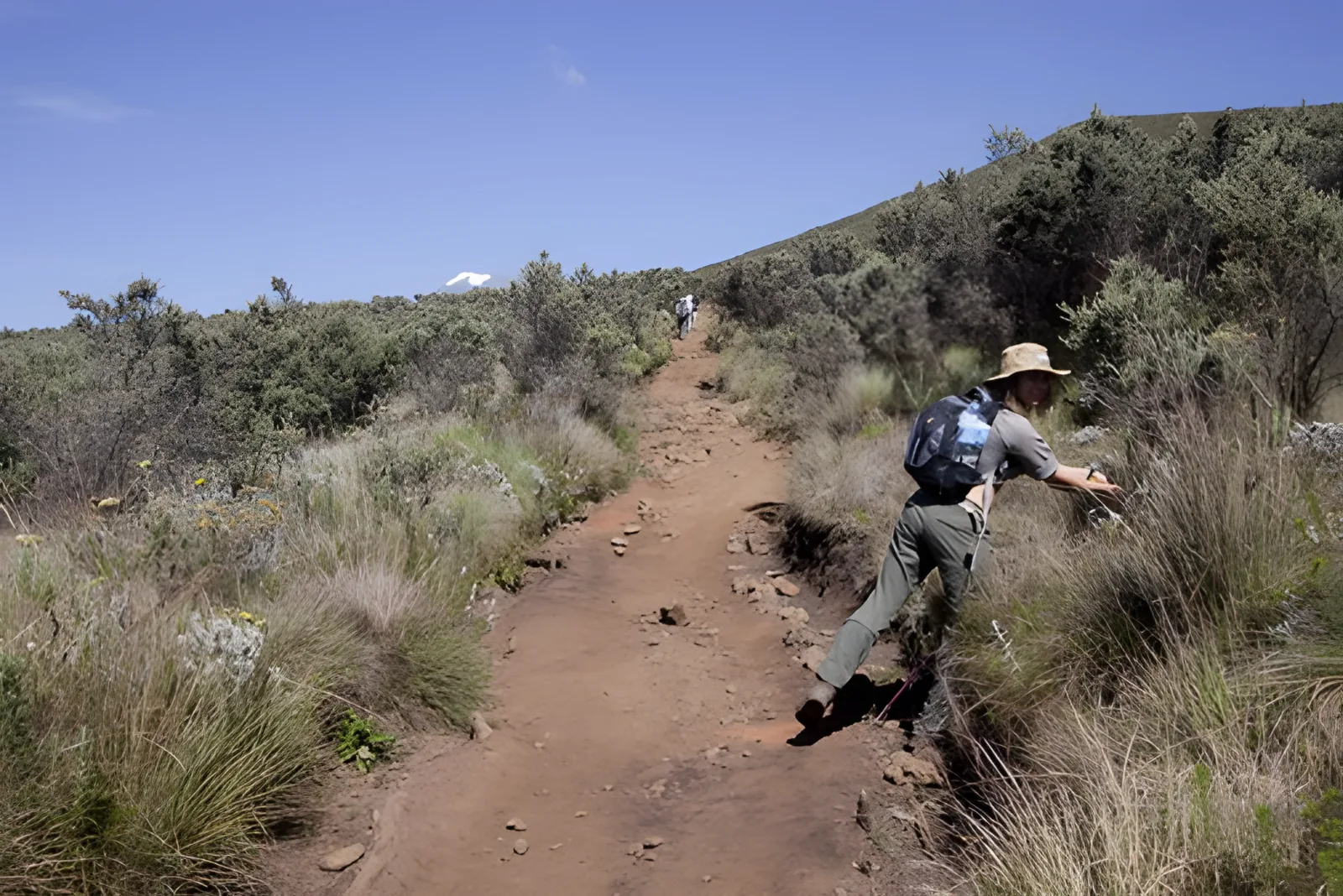
And here is the first base camp, but we will not stay here. Lunch, and a shower! Yes, I take part. I come out fresh, wet, barefoot onto the grass, to my legendary boots. An Austrian comes towards me, there seem to be more of them here than of others. I remember him, especially, even before the climb, I admired him – a mature man and such a beautiful body, and above all, the posture and the way of moving, I feel how I react to it. Oh, how few such people there are. He:
– It’s okay summit very nice!
– It’s very:) very nice!
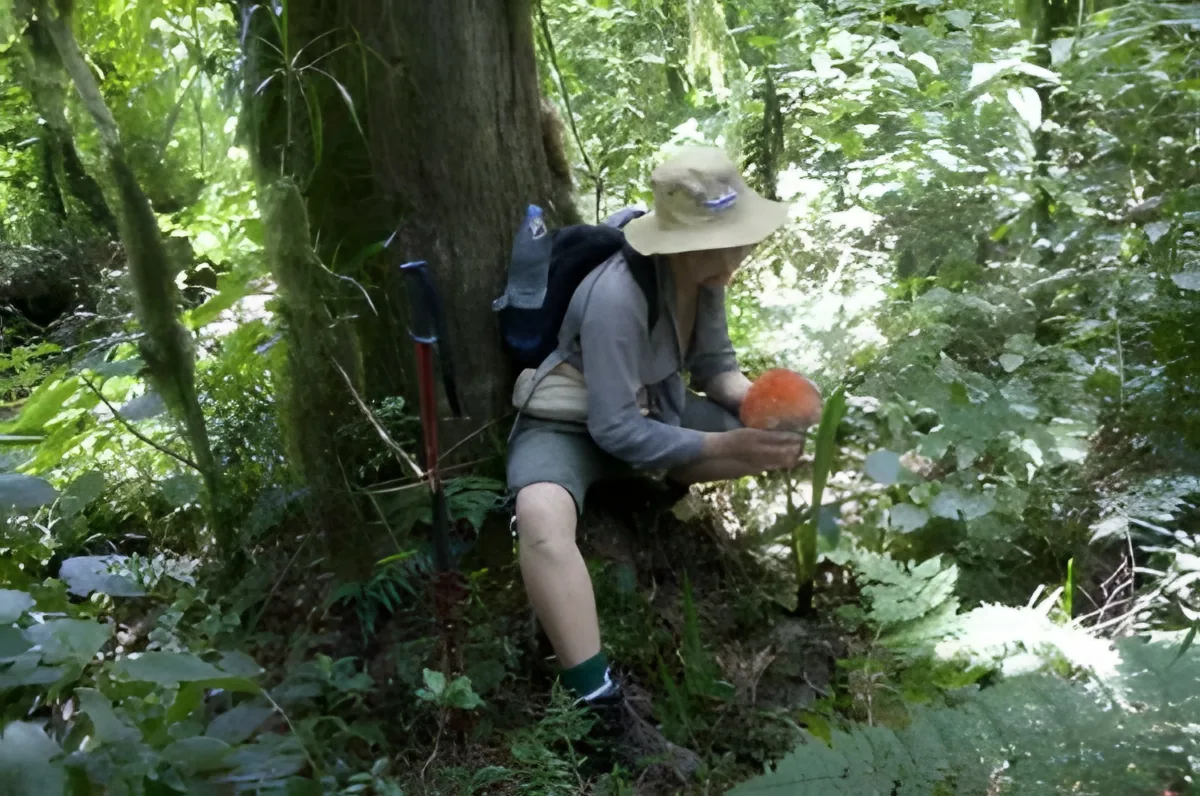
We exchange greetings. And down. Into the bright green forest with streams, waterfalls, bright flowers and chameleons. So much strength and inspiration. Crossing a bridge over a little lake – I announce that I am going to swim.
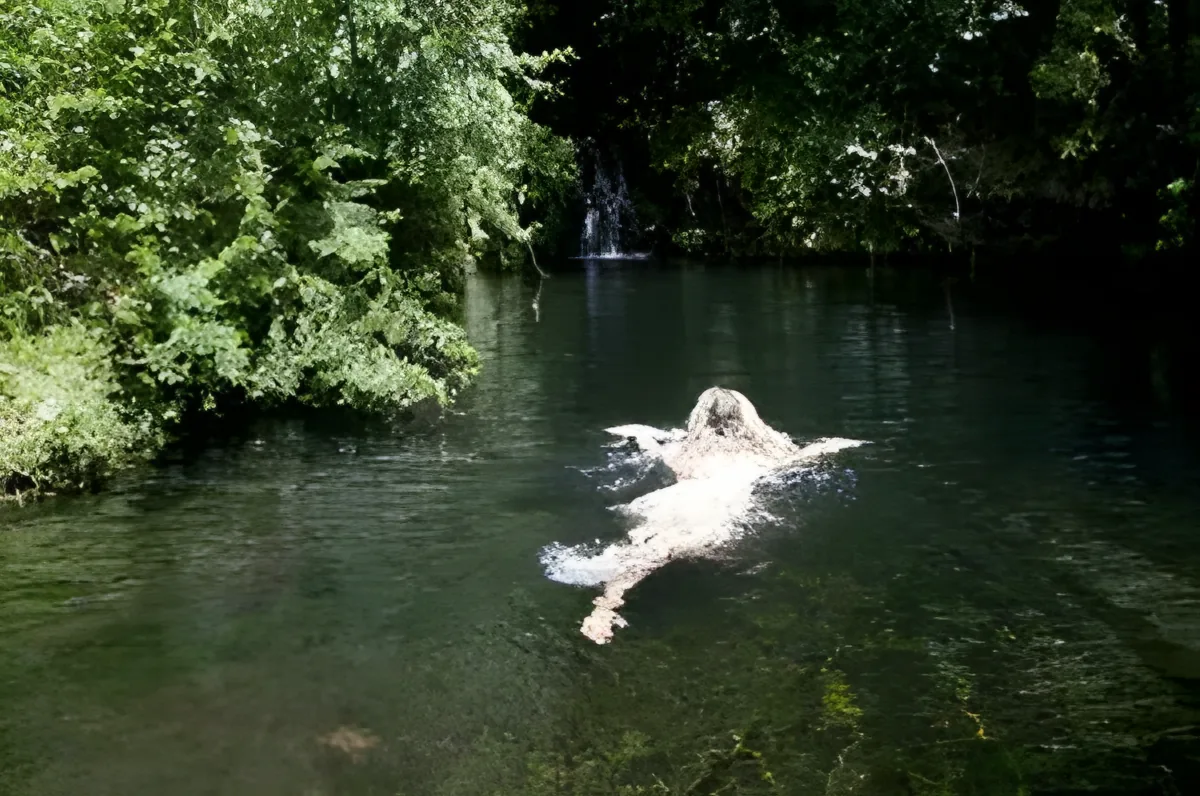
……More to come. The journey through Africa lasted from 8 to 30 January 2013.